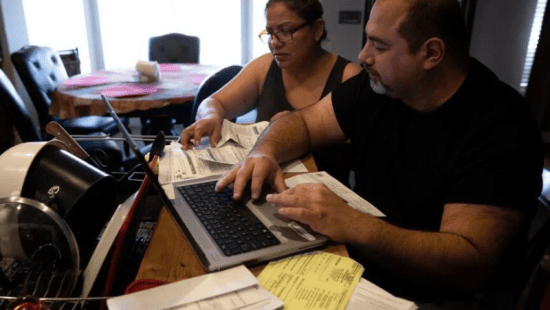
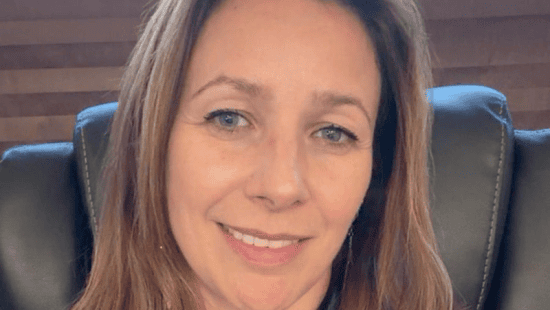
“When I heard about Coyotec and AI, I immediately went to the computer to look it up. It was simple curiosity. You notice right away that it is AI. It is not real; its voice is not yet close to a human’s; it does not sound human,” said El Alacrán.
The arrival of Entravision’s AI radio personality Coyotec has sparked concern among veteran Latino hosts as Spanish-language radio faces bankruptcies, declining jobs, and growing pressure to automate.
The appearance of Coyotec, the AI host developed by Entravision through Eduardo Maytorena, president of Audio at Entravision, has brought to light the conversation about the crisis facing Spanish-language radio in particular, and the global market. It has also prompted questions about how the Latino market will adapt, a market deeply attached to a radio host it trusts and considers part of the family.
“This kind of experiment is not prudent, much less in these times, when there are so many attacks on the community. People need the link that we have played on the radio,” says Marco Antonio “El Alacrán” Esparza, a Spanish-language radio personality known for his energetic style and connection with Latino audiences. He built much of his career in Atlanta, where he spent years on La Raza, before moving to Houston in 2023 to join La Grande 104.5 FM. He went back to Atlanta’s La Raza, where he is part of El Gallinero de la Mañana. His career reflects the enduring role of Spanish language radio personalities as familiar voices and trusted figures within Latino communities.
“We are leaders at heart; we are alive, we feel. AI, at the end of the day, does not ‘Pérez Prado’ (it does nothing to us),” he adds.
For him, the experience with AI in radio is not new. It has been performing different functions in programming for months, all because of radio’s crisis against streaming and other technologies.
The crisis already has an emblematic case in Spanish. Spanish Broadcasting System (SBS), one of the largest Spanish-language radio networks in the United States, filed for Chapter 11 on May 11, 2026, in a Delaware court, after about $310 million in secured notes came due unpaid on March 1. The company had announced an agreement with its creditors in early April. Under the plan, noteholders would receive all of the common stock and up to $70 million in new notes, which would cut the debt by more than 75 percent, according to the company’s lawyers. Founder Raúl Alarcón Jr. would remain chief executive, and the plan needs approval from the Federal Communications Commission. One analysis of the case attributes the problem to an overleveraged structure that limited digital investment.
The problem is not only a Spanish language one. According to S&P Global, traditional advertising revenue for U.S. radio is flat or declining, while digital channels such as podcasts and streaming are growing. Cumulus Media, with about 395 stations, filed for Chapter 11 in March, and Audacy had gone bankrupt before. Radio broadcasting jobs fell from 85,000 in 2019 to 66,000 in 2025, a drop of about 22 percent, according to the Bureau of Labor Statistics. The paradox is that the Hispanic audience is still there: a Katz report says 89 percent of Hispanics ages 12 and older listen to radio every week and 87 percent consider it trustworthy, the highest among the media measured. But media aimed at Hispanics receive only about four cents of every advertising dollar, an imbalance Katz calls structural.
In that context, artificial intelligence has gained ground, especially in lower audience time slots. Forbes, citing Live365, reports that stations use it to cover overnight shifts, weekends, and slots that previously had prerecorded music or no host, with tools such as Futuri’s RadioGPT, which combine scripts, synthetic voices, and music selection based on local topics. Hosts and unions warn that synthetic voices threaten jobs and weaken the connection with listeners.
Among the human voices holding up SBS amid the crisis is Alberto “Terry” Cortez, known as “El Terrible.” His morning show, “Al Aire con El Terrible,” premiered in 2017 on 97.9 FM La Raza in Los Angeles and two other stations of the network, and since 2018 it has been distributed nationally through AIRE Radio Networks, SBS’s network. By 2021, it reached 15 major Hispanic markets, and SBS has described him as one of the most influential personalities in Latin radio.
“Artificial intelligence is a tool that can help us find better content, improve our execution, and also identify what interests audiences day by day, but at least today it still cannot have an emotional connection with a human. Maybe it will in the future, but it cannot yet,” says Cortez.
For El Alacrán, curiosity is what Coyotec’s appearance has stirred, more than any real effect.
“When I heard about Coyotec and AI, I immediately went to the computer to look it up. It was simple curiosity. You notice right away that it is AI; it is not real, its voice does not come close to a human’s, it does not sound human. Through our voice, we reach the audience’s ear, and this is a downside of this technology. It has no feeling, especially for us Latinos.”
“At the end of the day, what defines us is the direct connection, the conversation, the message of encouragement. This goes against an industry that is struggling. Radio is suffering, and this hits it harder. The first word I said when I heard it was ‘Fake!’ In short, it lacks barrio,” El Alacrán adds.
The host acknowledges that this evolution, whether we like it or not, is coming, and that we do not yet know the impact it will have.
The New York Times reported that the DeepMind Institute, a research initiative run by Google’s AI division, published an essay last month arguing that people’s interactions with AI agents will soon move from one-on-one conversations to more collective social interactions, in which agents could outnumber humans. In an interview with the Times, Blaise Agüera y Arcas, a coauthor of the essay and a vice president and chief technology officer of Google’s Technology & Society group, said agents should not be seen as static individuals or compared with the intelligence of a single human, because human knowledge is collective, and AI will mirror that. The Times added that people seem to like it when AI agents seem human.
El Alacrán acknowledges that he uses AI in his daily life.
“Sometimes I invite my ChatGPT avatar to join conversations with my friends. It speaks in my style, it chats. At some point I disconnect it, because its opinions do not fit in the conversation. For me, if someone uses an AI host, they should say so from the start. If people know, there is no problem,” he adds.
The host expands on his curiosity about the Coyotec project.
“I would like to meet its creator and ask a few questions: How does it feel to take away people’s jobs? How is an AI that does not feel going to make us better people? Does he think it will last?” he shares. “However, I am aware it will get worse. In the future of radio, there will always be people who think only about money. They forget the heart,” he concludes.