LAUSD’s latest safety data show reported fighting and physical aggression declining, but student survey results and gaps in school-level transparency leave important questions for families.
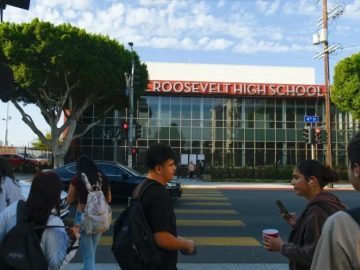
A student’s death at Benjamin Franklin High School has left a Highland Park community grieving. It has also raised painful questions for parents about what happened at the school and whether enough is being done to keep students safe.
Those questions deserve answers.
But there is an important differentiation to make.
The circumstances surrounding the Franklin High tragedy remain under investigation. LAUSD’s broader school-safety data are a separate question.
Those numbers tell a complicated story. Reported fighting and physical aggression increased sharply over several years. More recent district figures, however, show those incidents declining.
So what should families make of all of this?
On Sept. 30, a physical altercation broke out inside a classroom at Benjamin Franklin High School. Minutes later, 17-year-old senior Xavier Nungaray went over a fourth-floor railing and fell.
He was taken to a hospital, where he died.
The Los Angeles Police Department said there was no evidence of foul play while investigators continued examining what happened. Authorities were also aware of videos circulating online that appeared to show a confrontation before Nungaray’s fall. Investigators had not publicly established exactly how the confrontation and fall were connected.
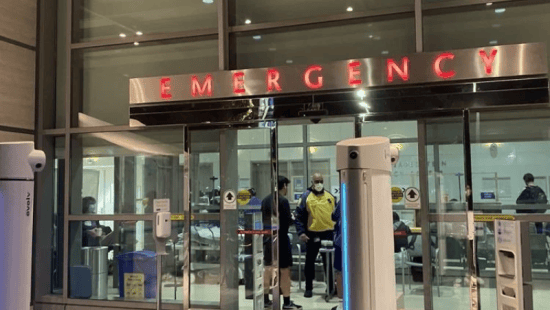
The campus went into lockdown for nearly three hours as police and firefighters responded. Families were initially told the lockdown involved a “medical emergency,” which left some parents frustrated as more information became public.
The next day, students, families and community members gathered for a vigil. Flowers, candles and messages appeared outside the school.
We reported on concerns about bullying and mental health at Franklin High.
That earlier reporting is important context, but it should not be used to claim that bullying caused Nungaray’s death or that the school failed to respond.
Those are questions investigators and school officials still have to answer.
The larger LAUSD safety question is different.
LAUSD reported 2,315 incidents classified as fighting and physical aggression in 2018–19.
That number rose to 4,950 in 2022–23 and 6,620 in 2023–24.
The 2023–24 figure was 33.7% higher than the previous school year.
Those figures come from LAUSD’s Incident System Tracking Accountability Report, or iSTAR, the district’s system for documenting incidents involving students and the school community. LAUSD says the system is designed to collect incident information and help the district identify patterns and develop responses.
But there is an important catch.
An incident count is not the same thing as a count of arrests or a measure of how dangerous a particular school is.
It is a record of reported incidents.
The numbers do not tell us why a particular fight happened. They do not tell us whether every school experienced the same increase. And they cannot tell us what happened inside Franklin High on Sept. 30.
Then the Numbers Started Moving Down
LAUSD’s November 2025 physical-safety update showed a substantial year-over-year decline in reported fighting and physical aggression.
From July 1 through Nov. 6, 2025, the district recorded 1,786 fighting and physical-aggression incidents, compared with 2,506 during the same period a year earlier.
That was a 28.7% decrease.
The district also looked at incidents per 1,000 students, which helps account for changes in enrollment. That measure fell from 5.74 to 4.46 — a 22.2% decrease.
Other categories, including threats, illegal or controlled substances and weapons, also declined during the period.
That information was presented to LAUSD’s School Climate and Safety Committee on Nov. 20, 2025.
So the picture is not as simple as saying school violence is getting worse.
Some important safety indicators had been moving in the wrong direction for years. But the district’s more recent comparable figures showed improvement.
Both things can be true.
What Are Students Saying?
There is another number parents should pay attention to: whether students themselves feel safe.
LAUSD’s 2025–26 School Experience Survey results are now available, including school-level and subgroup dashboards. The annual survey collects feedback from students, families and staff about their experiences at LAUSD schools.
In the 2025–26 researcher data, 65.0% of high school students said they felt safe at school, while 56.8% said they felt safe in the neighborhood around their school.
The districtwide high-school “Overall Safety” measure was 62.7%.
Those numbers do not tell us exactly why a student feels safe or unsafe.
But they do tell us something worth paying attention to.
Roughly one-third of high school students did not say they felt safe at school.
That is not a number families should ignore.
It also gives parents another way to look at school safety. A fight report tells us something happened. A student survey tells us something about how young people experience the school around them.
Neither measure tells the whole story.
Together, they give us a better picture.
The Missing Piece: What Is Happening at Each School?
This may be the most important question for parents.
If districtwide numbers are improving, are those improvements happening at my child’s school?
LAUSD makes school-level School Experience Survey results available through its online dashboard. Parents can use the district’s School Experience Survey results page to look at results for individual schools and compare different measures.
But the public picture is less complete when it comes to school-by-school incident data.
That creates a gap.
A districtwide number can tell parents that reported fights are falling across LAUSD. It cannot tell a parent whether the same thing is happening at their child’s campus.
And when something serious happens at a school, that difference becomes very real.
Parents want to know what is happening here, not only what is happening across a district with more than 500,000 students.
Read this other article we wrote if you are interested in knowing whether LAUSD’s new approach to school safety is working.
The issue is not simply whether LAUSD has counselors, school police, mental-health programs, restorative practices or other safety resources.
The harder question is whether those efforts are actually making schools safer and whether families have enough information to see the difference.
The available data show that LAUSD experienced a substantial increase in reported fighting and physical aggression over several years.
They also show a significant decline in those reported incidents in the most recent comparable period presented by the district.
And the latest School Experience Survey shows that 65.0% of high school students said they felt safe at school.
But the data do not show that the Franklin High tragedy was caused by the districtwide trend.
They do not show that Franklin High represents every LAUSD campus.
And they do not show that recent improvements mean the school-safety problem has been solved.
That is the part families should keep in mind.
A tragedy can force a community to ask harder questions.
The numbers can help us ask better ones.
LAUSD now has an opportunity to go further: show families, school by school, where safety is improving, where it is not and whether the district’s approach is actually making a difference.
For parents sending their children to school each morning, that is the information that matters most.