The 2026 closures span neighborhood institutions, family-owned restaurants and established operators. Their reasons differ — but together they reveal how difficult it has become to keep a restaurant open in Los Angeles.
Walk down a major Los Angeles boulevard this year and you may pass a dark storefront that once served tacos, pasta, burgers or dinner late into the night.
But the story of Los Angeles restaurants in 2026 is not simply that restaurants are closing.
It is who is closing, why they are closing, and what happens to the businesses that remain.
Eater’s continuing 2026 closure reporting has documented restaurants disappearing across the region, from longtime neighborhood businesses to higher-profile dining destinations. At the same time, new restaurants continue to open across Los Angeles, making this less a story of an industry disappearing than one being reshaped.
Consider four restaurants that took very different paths this year.
Taix, the nearly century-old French restaurant in Echo Park, closed March 29 after 99 years. The Los Angeles Conservancy says the property is being redeveloped for housing; the restaurant is expected to return in a smaller form as part of the new development.
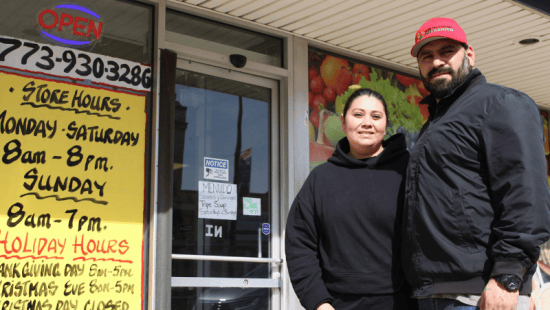
Cactus Taquería, a family-owned Hollywood institution, closed its Vine Street location in July after 34 years. The property’s owner, Project Angel Food, plans to demolish the building and expand its operations. The family has said it hopes to continue the business elsewhere.
Merois, Wolfgang Puck’s rooftop restaurant at the Sun Rose hotel in West Hollywood, closed May 1. Eater included it among a broader group of notable Los Angeles closures during the spring and summer.
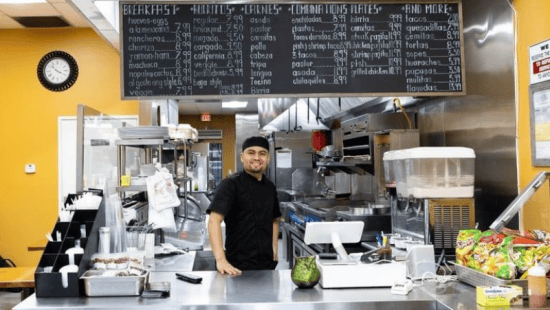
And Sky’s Gourmet Tacos, a Mid-City institution for 34 years, closed its Pico Boulevard restaurant in August. Founder Barbara Burrell said the economics of the location no longer worked, citing diminished foot traffic, rising rent and utility costs and competition from ghost kitchens. The business is continuing through catering and a ghost-kitchen model.
Those stories matter because they show that a restaurant closing does not necessarily mean the same thing in every case.
Sometimes the pressure is the property.
Sometimes it is the cost of operating.
Sometimes the business itself is changing.
RestaurantData estimates that 391 restaurant locations closed in California during the first half of 2026. Across the United States and Canada, its research identified 8,171 estimated closures during the same period.
But there is an important limitation.
A closure count is not a restaurant failure rate. It tells us how many locations were recorded as closing. It does not tell us the probability that an individual restaurant will fail, nor does it establish why each location closed.
The city is simultaneously losing longtime restaurants and gaining new ones. Eater’s September 2026 coverage lists another wave of openings planned or underway, including restaurants in Silver Lake, Exposition Park, Culver City, the Sunset Strip and Pacific Palisades.
The better description, then, may be turnover rather than disappearance.
For operators, the pressures can overlap.
Labor, rent, food, utilities, insurance and changing customer behavior all affect the economics of a restaurant. Eater’s 2026 closure reporting has also pointed to the lingering effects of the pandemic, the 2023 Hollywood labor strikes, the 2025 fires and immigration-enforcement activity as additional pressures affecting parts of the restaurant economy.
Parriva has reported on another part of that equation: what happens when customers simply stop showing up.
In our coverage of UCLA research on immigration enforcement and Los Angeles businesses, researchers found approximately 46,000 fewer customer visits in commercial corridors during the two weeks following major enforcement activity in June 2025, with an estimated $3.2 million in lost sales.
That does not explain every restaurant closure. It does show how quickly a change in customer behavior can become a business problem when margins are already narrow.
Parriva’s reporting on Latino-owned restaurants has also documented the combination of rising operating costs, labor challenges and commercial pressures facing family-run food businesses.
What the closures can and cannot tell us
The evidence can tell us that restaurant turnover is significant and that operators are confronting multiple pressures.
It cannot tell us that every restaurant is closing because of inflation.
It cannot establish that rising labor costs caused any particular closure unless the operator or reliable evidence says so.
It cannot establish that Latino-owned restaurants are disproportionately closing without representative data comparing ownership groups.
And it cannot prove that Los Angeles is experiencing an industry-wide collapse.
There is another important contrast.
A restaurant can close its dining room without the business disappearing.
Sky’s Gourmet Tacos is one example: its brick-and-mortar location closed, but the family is continuing through catering and a ghost-kitchen operation.
That may become increasingly important as restaurant owners look for ways to operate with less expensive physical space.
What happens to the neighborhoods?
The stakes go beyond food.
A restaurant can provide jobs, generate business for suppliers, bring customers to neighboring stores and serve as a gathering place for a commercial corridor.
When a longtime restaurant disappears, the loss can therefore be economic, social and cultural at the same time.
That is especially visible when a family business has occupied the same location for decades.
But the opposite is also happening.
New operators are moving into Los Angeles neighborhoods. Old spaces are being redeveloped. Some restaurant brands are adapting to catering, delivery or smaller footprints.
The result is not a city without restaurants.
It is a city in which the restaurant business itself is changing.
And that may be the most important thing to watch.
In Los Angeles in 2026, longevity and a loyal customer base can still matter enormously. But they do not necessarily protect a restaurant from a property sale, an unsustainable lease, rising operating costs or changing customer behavior.
For restaurant owners, workers and the neighborhoods built around them, the question is becoming less about whether Los Angeles will continue to eat out.
It is about what kinds of restaurants can afford to remain part of the city.