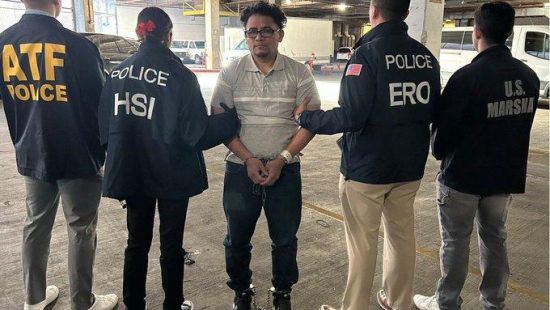
A deportation order tells a person they must leave the United States. It does not always mean they will be sent to the country where they are a citizen.
That separation is becoming increasingly important as the United States expands the use of what are known as third-country deportations; sending people to countries where they are not citizens and, in some cases, have never lived.
The issue has received new attention in Latin America after the United States began sending Mexican nationals to Guatemala and Honduras even though Mexico has said it is willing to receive its citizens. Parriva previously reported on that development in U.S. Third-Country Deportations: Why Some Mexican Deportees Are Being Sent to Guatemala and Honduras.
But the Mexican case is part of a larger system.
If someone is deported from the United States, where do they actually go?
Deportation and destination are not the same thing
A removal order and the physical removal of a person are two different steps.
A country seeking to carry out a removal generally needs cooperation from another government when it needs that government to confirm nationality, issue travel documents or receive the person.
The Migration Policy Institute has documented how countries sometimes resist receiving their nationals. It found that outright refusal is relatively uncommon; governments may instead use bureaucratic delays, nonresponse or documentation requirements to slow the process. Political concerns, remittances and diplomatic tensions can also influence cooperation.
That can create a problem for the country carrying out the deportation.
If the person’s country will not accept them, the United States can face difficulty completing the removal.
Third-country agreements provide another option.
What is a third-country deportation?
A third-country deportation occurs when someone is removed to a country other than their country of citizenship or origin.
The International Rescue Committee describes third-country removals as the practice of sending people to countries with which they may have little or no connection. The organization says the United States has removed people to more than 30 countries under such arrangements.
For example:
Country A: United States
Person’s citizenship: Mexico
Third-country destination: Guatemala
The person is being removed from the United States, but Guatemala is not their home country.
That contrast matters because the experience after arrival can be very different from returning home.
Why would another country agree to receive someone else’s deportees?
There is no single explanation.
Some arrangements involve diplomatic negotiations, financial assistance, logistical support or other forms of cooperation.
Costa Rica, for example, agreed to receive limited numbers of third-country deportees from the United States. Refugees International reported that the arrangement called for up to 25 people a week, while the receiving country would receive U.S. assistance connected to the program.
Other governments may view cooperation as part of broader diplomatic relations with Washington.
The important point is that the terms vary from country to country. It would be misleading to assume every government is simply being paid to accept deportees.
Recent arrangements also demonstrate that third-country removals can involve temporary stays rather than permanent resettlement.
In September 2026, Guyana received six deportees from the United States, nationals of Cuba and Afghanistan, under an arrangement negotiated over several months. Guyana’s government said the arrangement would last one year and did not constitute permanent resettlement. The individuals may eventually return to their home countries or be relocated elsewhere. Associated Press: Cubans and Afghans deported from U.S. arrive in Guyana
Why are countries sometimes reluctant to take their own citizens?
This is the other side of the system.
It may seem obvious that a country should accept its own citizens. But governments can have political and economic reasons to resist or slow the process.
The Migration Policy Institute found that returning deportees can mean losing workers who send money home to their families. Governments may also worry about domestic political backlash, security concerns or the perception that they are accepting people another country wants to remove. Migration Policy Institute: Why Some Countries Refuse to Accept Return of Their Deportees
The result is often not an outright refusal.
It can be something much harder to see:
delay.
A government may take time to verify nationality, issue documentation or respond to requests.
That means an immigration removal order and an actual physical removal are two different stages of the process.
Latin America is becoming an important part of the system
The recent Mexican example shows how quickly the system can change.
According to official data reported by the Associated Press, the United States had sent nearly 2,300 Mexican nationals to Guatemala in 2026 and at least dozens more to Honduras by August. Guatemala described its role as a transit stopover, with Mexican nationals subsequently being transported into Mexico. Associated Press: More than 2,300 Mexicans sent to Guatemala and Honduras
CBS News separately reported that the transfers were taking place despite Mexico’s willingness to receive its own citizens.
The significance goes beyond the number of people involved.
For decades, the basic expectation for a Mexican national deported from the United States was that the person would return to Mexico.
Now, in some cases, the route can look more like:
United States → Guatemala → Mexico
rather than:
United States → Mexico
That is why the Mexico case is useful for understanding the larger system.
It shows that country of citizenship does not necessarily determine the first destination after removal.
What happens after someone arrives in a third country?
That depends heavily on the agreement and the country involved.
Some people may be allowed to remain temporarily. Others may eventually be transferred to their country of citizenship. Some may seek asylum or another form of legal protection.
But being sent to a third country can create practical problems.
Human Rights Watch documented the experiences of people from Cuba, Haiti, Honduras, Nicaragua, Venezuela, El Salvador and Jamaica who were deported from the United States to Mexico. Its investigation found that many faced difficulties involving housing, employment, health care and legal status after arrival.
The International Rescue Committee has also warned that people removed to third countries can face heightened risks when they have no meaningful connection to the destination and lack access to legal assistance or effective protection. International Rescue Committee: Third-country removals, explained
That does not mean every third-country transfer produces the same outcome. The circumstances depend on the individual, the destination country and the terms of the agreement.
But it changes the question a deported person faces.
It is no longer simply:
“How do I get home?”
It can become:
“Am I being allowed to stay here, or am I going somewhere else?”
There are legal limits
Third-country deportation does not mean governments can simply send anyone anywhere.
International refugee law includes the principle of non-refoulement, which generally prohibits sending a person to a place where they face persecution or other serious threats covered by applicable protections.
The United Nations refugee agency, UNHCR, says the principle can apply to third-country transfers as well as direct returns. UNHCR: Access to territory and non-refoulement
For people seeking asylum or other forms of protection, the legal questions can therefore be especially important.
The existence of a third-country agreement does not, by itself, answer whether an individual can legally be transferred there.
What this means for Latino families
For Latino immigrants and their families, the most important thing to understand is that three concepts that sound similar are actually different:
Citizenship.
The country where a person is a citizen.
Removal order.
The legal decision requiring the person to leave the United States.
Destination.
The country that actually receives the person.
Those three things often line up.
But they don’t always.
And as third-country arrangements expand, that distinction may become increasingly important for people from Latin America.
A deportation order does not necessarily mean “you are going home.”
It means the United States has determined that you must leave.
Where you go next can depend on whether your country accepts you, whether another country agrees to receive you, the diplomatic agreements between governments and the legal protections that apply to your individual case.
The emerging third-country system therefore changes something fundamental about how deportation works.
The country you’re from and the country you’re sent to are no longer always the same place.