The United States and Israel launched a major attack on targets across Iran on Saturday, marking a dramatic escalation in long-running tensions between the countries.
US President Donald Trump urged civilians in Iran to take cover during the strikes. He later issued a striking appeal to the Iranian public, suggesting that once operations conclude, the country’s government could be reshaped. His remarks hinted that the allies may be seeking broader political change beyond immediate military objectives.
In a video posted on social media, Trump claimed Iran has continued to advance its nuclear program and is working on missile systems capable of reaching the United States.
Initial Targets in Tehran
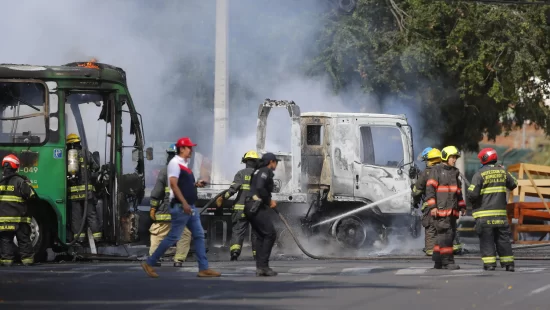
Early strikes appeared to focus on a compound associated with Iran’s 86-year-old Supreme Leader, Ayatollah Ali Khamenei, located in central Tehran. It was not immediately clear whether he was present at the time of the attack. Thick smoke was seen rising over the Iranian capital following the explosions.
The attack signaled one of the most direct military confrontations between the US, Israel, and Iran in years.
Why the US and Israel Attacked Iran
Tensions had intensified in recent weeks as American warships moved into the region. Trump previously stated that he sought a diplomatic agreement to curb Iran’s nuclear ambitions.
Israeli Prime Minister Benjamin Netanyahu, who has repeatedly described Iran as Israel’s primary security threat, said the coordinated military action was intended to remove what he called an existential danger posed by Iran’s nuclear and missile programs.
The strikes appear to reflect long-standing concerns from both Washington and Jerusalem regarding Iran’s expanding military capabilities and regional influence.
Trump’s Broader Justification
In his statement, Trump framed the operation as addressing more than just Iran’s nuclear program. I have cited grievances dating back to the 1979 Islamic Revolution, which transformed Iran from a close US ally into a longstanding adversary.
The president’s remarks suggest the military campaign may be aimed at reshaping the broader strategic balance in the Middle East.
Regional Escalation and Retaliation
The conflict quickly spread beyond Iran’s borders.
Iran’s Revolutionary Guard announced it launched a first wave of drones and missiles targeting Israel in response to the strikes. Israeli authorities issued a nationwide alert as the military moved to intercept incoming threats.
Several countries across the Middle East took emergency precautions:
Iraq and the United Arab Emirates closed their airspace.
Air raid sirens sounded in Jordan.
Bahrain reported a missile attack targeting the US Navy’s Fifth Fleet headquarters.
Explosions were also heard in Qatar.
The unfolding crisis raises fears of a broader regional conflict involving multiple Middle Eastern states.
What Happens Next
As the situation develops, global markets and governments are closely monitoring the potential for further escalation. Analysts warn that continued retaliation between Iran, Israel, and the United States could destabilize the wider Middle East.
More updates are expected as officials from all sides provide additional details about the scope and objectives of the military operation.