Trump midterm election interference concerns are prompting Democratic attorneys general to prepare legal defenses, raising major implications for voting rights, Latino turnout, and congressional control in 2026.
Democratic attorneys general are parsing President Donald Trump’s language for clues about how he might try to interfere with the midterm elections and running exercises to prepare for a variety of potential scenarios.
As the president’s approval rating has nosedived throughout his first year back in office, the administration has tried to assert federal control over elections, demanded states’ voter rolls, and raided a voting hub outside Atlanta, Georgia.
Trump himself has been on a personal mission to pressure red states into redrawing their congressional maps to benefit Republicans, convince Senate Republicans to do whatever it takes to pass voting restrictions, and revive debunked conspiracy theories about his 2020 loss to Joe Biden.
The Democratic Congressional Campaign Committee on Monday unveiled the first dozen candidates in its “Red to Blue” program, a high-stakes effort to flip Republican-held districts ahead of the 2026 midterms.
The list blends long-standing targets, including Representatives Juan Ciscomani of Arizona, Zach Nunn and Mariannette Miller-Meeks of Iowa, and Scott Perry of Pennsylvania, with newer faces such as Andy Ogles of Tennessee and Chuck Edwards of North Carolina.
All of this has Democrats on edge about what Trump might do come November, when—barring widespread congressional redistricting or a major economic turnaround—Republicans appear likely to struggle to keep their majority in Congress.
For months, the Democratic Party’s top prosecutors have gathered in hotel rooms and met over Zoom to try to predict what exactly Trump might do and to game out their responses, Politico reported.
They’ve also been monitoring Trump and his allies’ every word about elections for hints about what the administration could do next.
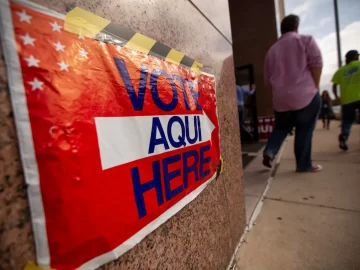
Potential scenarios include preparing for the administration to try to seize ballots and voting machines, disrupt the delivery of mail-in ballots, or send soldiers or federal immigration agents to polling locations to intimidate voters, according to Politico.