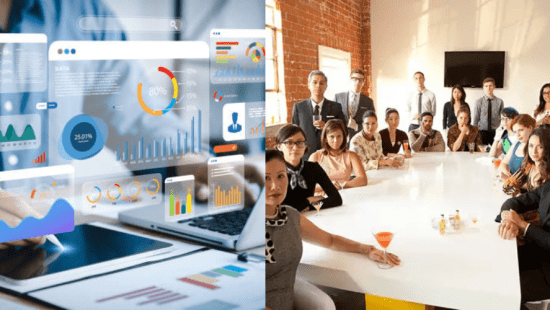
Physical stores are evolving into omnichannel hubs that fuel digital sales, logistics, and consumer loyalty.
For more than a decade, the narrative around American retail has been dominated by one prediction: physical stores were on borrowed time. E-commerce would replace them, malls would empty out, and storefronts would fade into nostalgia.
That prediction hasn’t held up.
Across the U.S., brick-and-mortar retail is quietly reasserting itself — not as a rival to digital commerce, but as its backbone. The modern store is no longer just a place to transact. It is becoming infrastructure.
Recent research from Deloitte, the International Council of Shopping Centers (ICSC), and industry reporting synthesized by Forbes shows that roughly 76% to 85% of all retail sales still occur in physical stores, even after years of online growth. More telling: physical locations increasingly drive digital sales rather than compete with them.
The Store as Growth Engine
Retail analysts describe this dynamic as the “halo effect.” When a brand opens or maintains a physical location, nearby online traffic and total sales rise. Stores function as showrooms, service centers, return hubs, and last-mile logistics points — roles that pure e-commerce struggles to replicate efficiently.
Deloitte has found that omnichannel shoppers — those who move fluidly between online and in-store experiences — spend significantly more over time than single-channel customers. ICSC research similarly notes that physical stores remain the top driver of consumer trust and brand loyalty.
This matters for communities where retail jobs and local commerce still anchor household stability. Latino workers are disproportionately represented in retail operations, logistics, and frontline service roles — meaning the health of physical retail has real economic consequences beyond corporate earnings.
Why Consumers Are Coming Back
The resurgence is not driven by nostalgia. It’s driven by friction.
Rising shipping costs, delayed deliveries, and return hassles have exposed the limits of online-only models. At the same time, consumers — including Gen Z — report growing interest in in-store shopping for immediacy, discovery, and human interaction, according to multiple year-over-year surveys cited by ICSC.
Retailers are responding by redesigning stores as “phygital” spaces, where mobile apps, inventory visibility, buy-online-pick-up-in-store (BOPIS), and same-day fulfillment are standard. In 2021, physical store sales grew 18.5%, outpacing e-commerce growth — an early signal that the pendulum was already swinging back.
A Hybrid Future, Not a Reversal
Despite persistent talk of a “retail apocalypse,” new store openings have recently outpaced closures in several major markets. The takeaway is not that digital commerce failed — it’s that digital works best when grounded in physical presence.
The future of retail is not screen-only or store-only. It is hybrid, local, and operationally integrated. And brick-and-mortar, far from disappearing, is proving essential to making that future work.

Location Still Matters: Why Choosing the Right Store Can Define a Business’s Future