Beyond the spectacle, the 2026 halftime show turned everyday trades and small businesses into protagonists of an economy rooted in culture.
The Super Bowl 2026 halftime show, headlined by Bad Bunny, was widely read as a cultural milestone. But it was also an economic statement. On one of the most-watched stages in the world, the Puerto Rican artist pushed aside big brands and placed small businesses at the center—those that sustain daily life for millions of Latinos across the United States and Latin America.
The staging featured clear references to coconut and piragua vendors, neighborhood corner stores, barbershops, construction workers, gold-and-silver buying shops, as well as real businesses like Brooklyn’s Caribbean Social Club and Villa’s Tacos, a Los Angeles–based taquería. The message was consistent: Latino culture cannot be understood without the daily labor of people who live by their trade, self-employment, and neighborhood economies.
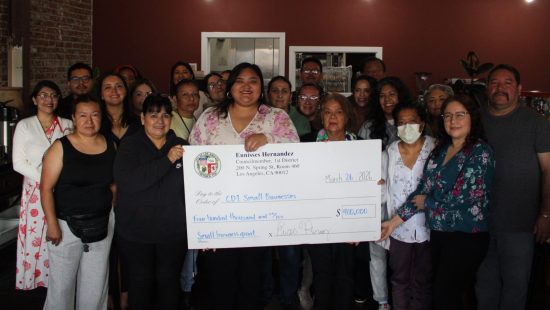
According to the U.S. Small Business Administration, Latinos are the fastest-growing group of small business creators in the United States, with more than 4.7 million businesses generating income, jobs, and local economic mobility. Yet much of this ecosystem remains invisible in mainstream economic narratives.
Onstage, the coconut and piragua vendors—traditional Caribbean shaved ice—represented thousands of merchants operating with low startup costs, tight margins, and high turnover. Community economists often describe these businesses as “survival microeconomies,” essential in neighborhoods where access to formal credit is limited.
The corner store and barbershop appeared as symbols of closeness and trust. “These businesses function as informal support networks, not just points of sale,” urban economist María Maldonado, who specializes in Latino economies, has noted in previous interviews. In many cases, they are the first entrepreneurial step for immigrant families and a steady source of income.
The presence of construction workers underscored the value of traditional trades to urban growth, while gold and silver buying shops alluded to common financial coping strategies during times of economic uncertainty.
The inclusion of the Caribbean Social Club, founded and run by Toñita in Brooklyn, brought decades of migration, cultural resistance, and community-based economics onto the stage. Villa’s Tacos, meanwhile, symbolized how a small food business can cross borders and become a cultural reference without losing its neighborhood identity.
Far from the language of startups and unicorns, Bad Bunny offered a different vision of entrepreneurship—one born from necessity, trade, and the barrio. On the most-watched show of the year, the Latino popular economy stopped being background and became the main event.
Bad Bunny Isn’t Paid for the Super Bowl — and That’s Exactly Why It Matters