The Operation Charlotte’s Web ICE crackdown reaches deep into North Carolina’s mountain towns — and ignites a surprising wave of local resistance.

On a chilly evening in mid-November, about 135 people gathered along a highway in Boone, North Carolina, a small Appalachian college town not known as a hotbed of leftist protests. They held signs reading “Nazis were just following orders too” and “Time to melt the ICE,” and chanted profane rebukes at Immigration and Customs Enforcement agents rumored to be in the area. “They came here thinking they wouldn’t be bothered,” one Appalachian State University student told The Appalachian at the impromptu rally. “Boone is a small, southern, white, mountain town. We need to let them know they’ll be bothered anywhere they go.” In a region often stereotyped as silently conservative, this flash of defiance was a starting sign that the battle lines of American politics are shifting in unexpected ways.
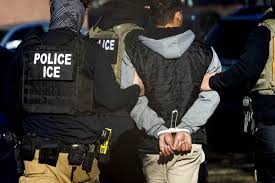
For the past several weeks, the Trump administration has been rolling out a mass deportation campaign of unprecedented scope — one that is now reaching deep into Appalachia. Branded “Operation Charlotte’s Web,” a deployment of hundreds of Department of Homeland Security and Border Patrol agents descended on North Carolina in mid-November, making sweeping arrests in and around Charlotte and into the state’s rural mountain counties.
Officials billed the effort as targeting the “worst of the worst” criminal aliens, but the numbers tell a different story: More than 370 people were arrested, only 44 of whom had any prior criminal record, according to DHS. The vast majority were ordinary undocumented residents — people going to work or school, not “violent criminals” — which underscores that the crackdown is less about public safety than meeting political quotas.
Indeed, Trump campaigned on conducting the largest deportation operation in the U.S. history, vowing to round up 15 to 20 million people (which is more than the estimated 14 million undocumented people living in the U.S.) and pressing ICE to triple its arrest rates to 3,000 per day. The federal dragnet has already driven ICE arrests to levels not seen in years; immigrants without criminal convictions now make up the largest share of detainees. But the administration is also facing widespread resistance to its policy of indiscriminate arrests and mass deportations, not as the exception, but as the rule — and among everyday, fed-up Americans across the country.
Kicking the Hornets’ Nest
What officials didn’t seem to anticipate was that this crackdown would face fierce pushback not only in liberal hubs with large immigrant communities like Los Angeles or Chicago, but in predominantly white, working-class communities.
In Charlotte, a city on the edge of the Blue Ridge foothills, activists scrambled to implement a broad early-warning network to track federal agents. Thousands of local volunteers — many of them outside the city’s political establishment — mobilized to monitor convoys and alert vulnerable families in real time. They patrolled neighborhoods, followed unmarked vehicles, and honked their car horns to warn others when Customs and Border Protection or ICE agents were spotted: acts of quiet guerrilla resistance that Border Patrol’s local commander derided as “cult behavior.” The effort spanned from downtown Charlotte into the rural western counties, with observers checking hotels and Walmart parking lots in mountain towns for staging areas and relaying tips across the region.
By the time the sheriff announced the feds had pulled out — and video showed a convoy hightailing it down the highway — locals were already hailing it as a “hornet’s nest” victory, comparing the retreat to British Gen. Charles Cornwallis’s abrupt withdrawal from the area during the Revolutionary War after being met with unexpectedly fierce resistance.
ICE Sent 600 Immigrant Kids to Detention in Federal Shelters This Year. It’s a New Record.