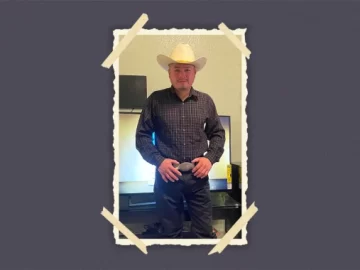
As government agencies stayed away, volunteer Samuel Schultz organized nonstop relief at a desert border gap—work now captured in a new documentary, Sam.
Somewhere between 2023 and 2024, Samuel Schultz says he made at least 82,000 peanut butter and jelly sandwiches for migrants who had crossed the border near Jacumba, California.
During that time, hundreds of migrants, on a daily basis, were walking through a gap in the border barrier and into the U.S.
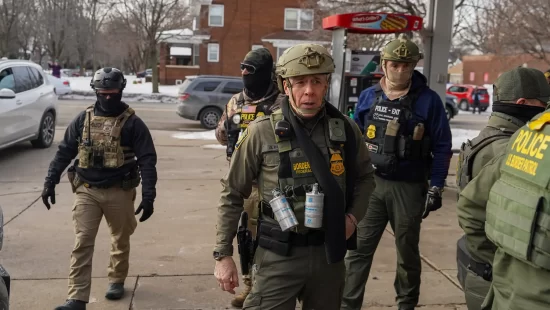
Most were forced to spend days out in the elements before Border Patrol agents could pick them up and take them to be processed.
“One of the biggest breaks in the wall where people were coming through was very close to my house, less than a mile away,” Schultz said. “As soon as we saw people crossing the desert with no water, it was an automatic to bring people water, it’s just what you do.”
Schultz says he used his background in developmental logistics in Southeast Asia to help the migrants.
“I spent decades doing that sort of thing, so I’m used to transient populations and things like that.”
Schultz and other volunteers organized relief efforts and helped as many people as they could, often working nonstop for weeks at a time.
“We were overwhelmed, it was just us,” he said. “From the very beginning I was going, ‘Where’s the Red Cross? Where’s the National Guard? The people who are actually equipped logistically to be able to do all of this in this situation?’ But they never came.”
His work has become the basis for a documentary produced by NOMO Films, a production company out of New York.
The production is called “Sam.”
Schultz is very humble about being the focal point of this film.
“Anything like that is just a little vignette shot in a couple of hours, it’s just a little slice of life.”
The days when Schultz could be found passing out PB&J sandwiches and distributing bottles of water are long gone.
The gathering points for migrants are now quiet, void of any people, and the gap in the border barrier used by migrants to enter the U.S. near Jacumba is being sealed off by contractors.
A small piece of Schultz years ago when he interacted with people from all over the world, migrants who were desperate to start a new life.
“All that hope that was stored up in those people, that you saw in their faces, is now being eradicated in various ways.”