New enforcement measures along the U.S.–Mexico border revive humanitarian concerns after past migrant deaths linked to river buoys
The United States Embassy in Mexico issued a direct warning to migrants this week: enforcement along the southern border is no longer limited to land-based walls. Through social media, the diplomatic mission highlighted the installation of floating barriers in the Rio Grande, paired with constant surveillance, as part of a broader strategy to deter unauthorized crossings and drug trafficking into U.S. territory.
“The wall on the southern border is not only on land. If you attempt to cross the Rio Grande, you will encounter floating barriers and constant surveillance,” the Embassy said in a post that included video footage of buoys lined across the river, set to the song Down by the Riverside—a choice that drew criticism for its tone amid an ongoing humanitarian crisis.
Border security and a political message
U.S. Secretary of Homeland Security Kristi Noem confirmed that the so-called “floating wall” is funded through federal resources approved by Congress at the initiative of President Donald Trump. According to Noem, the barriers are intended to stop illegal crossings between ports of entry and strengthen efforts to combat drug trafficking.
Border security experts consulted by Parriva say the measure serves a dual purpose: physical deterrence and political signaling. “These barriers are designed not only to block crossings, but to project an image of total border control,” said a former U.S. immigration official, who warned that such infrastructure often increases risks for migrants without meaningfully reducing migration flows.
Documented humanitarian risks
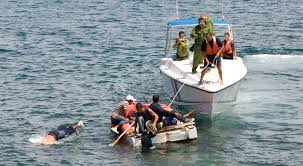
A troubling precedent dates back to 2023, when authorities recovered the body of a person trapped near floating buoys installed by the state of Texas in the Rio Grande. Human rights organizations have since documented how floating barriers—combined with strong currents and armed surveillance—increase the risk of drowning and push migrants toward more remote and dangerous crossing routes.
“International evidence shows that when visible crossings are closed, people don’t stop migrating—they face greater danger instead,” said a researcher with the Migration Policy Institute, noting that many of those attempting to cross are asylum seekers with family ties in the United States.
Impact on Latino communities and the binational relationship
For Latino communities on both sides of the border, the hardening of enforcement along the Rio Grande carries immediate consequences. In border cities in Texas and northern Mexico, community leaders warn of the psychological and social toll of an increasingly militarized border, as well as the added strain on shelters and local Mexican authorities.
Mexico’s government has reiterated in diplomatic forums that migration must be addressed through a regional approach, tackling root causes such as violence, poverty, and political instability in Central and South America.
An ongoing debate
The floating barriers in the Rio Grande have become a symbol of current U.S. immigration policy—firm in its security rhetoric, yet deeply contested for its human impact. As Washington reinforces its border, civil society groups and policy experts argue that without expanded legal pathways and regional cooperation, migration pressures will persist and risks will escalate along one of the hemisphere’s most dangerous corridors.
For millions of Latino families, the debate is far from abstract: it is about lives in transit, human rights, and the future of a shared border.