Cuellar, Gonzalez, and Gluesenkamp Perez emerge as key swing votes as Democrats fracture over immigration enforcement funding.
When the U.S. House narrowly approved a $64.4 billion Department of Homeland Security (DHS) funding bill on January 22, 2026, the deciding margin did not come from Republican unity alone. It came from three Latino Democrats — Henry Cuellar and Vicente Gonzalez of Texas, and Marie Gluesenkamp Perez of Washington — whose votes helped push the measure across the finish line, 220–207, amid growing backlash to Immigration and Customs Enforcement (ICE) operations nationwide.
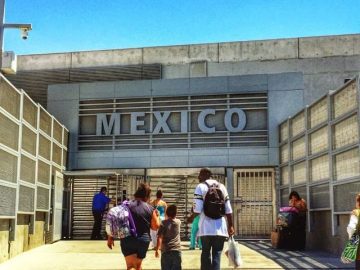
Their decision has drawn particular attention because each represents districts where immigration is not an abstract issue but a daily reality — and where Latino voters are watching closely how power is exercised in moments that matter.
Cuellar and Gonzalez, both representing South Texas districts shaped by border policy and cross-border commerce, have long positioned themselves as centrists willing to break with party leadership on immigration and security. Both argued that voting against DHS funding would risk a partial government shutdown and jeopardize funding for agencies such as FEMA, the Coast Guard, and cybersecurity operations.
Gluesenkamp Perez, whose swing district in southwest Washington includes a growing Latino population, framed her vote as a governance decision rather than an endorsement of ICE’s enforcement record — a distinction echoed by members of the Problem Solvers Caucus.
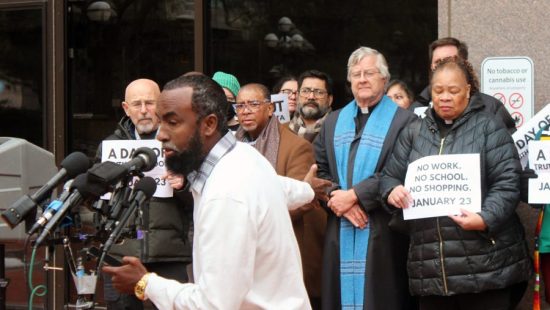
Most House Democrats opposed the bill, arguing it failed to rein in ICE practices tied to workplace raids, detentions, and family separations. Immigrant-rights groups warned that continued funding without stronger guardrails would deepen fear in Latino and mixed-status communities.
According to the Pew Research Center, Latinos make up a significant share of undocumented and mixed-status households nationwide. Decisions about ICE funding shape how safe families feel going to work, school, or even speaking out online.
Policy analysts at the Migration Policy Institute have noted that Latino voters are not monolithic on immigration, but consistently express concern about enforcement policies that lack transparency and accountability — even when framed as border security.
The DHS vote exposes a growing tension within the Democratic Party: whether electoral survival in swing and border districts requires accommodation — or whether such votes risk alienating core constituencies.
For Latino voters, the question raised by this vote is not symbolic. It is concrete: when immigration enforcement funding is on the line, who draws boundaries — and who is willing to cross them?
As the bill moves to the Senate, the political consequences of those three “yes” votes are likely just beginning.
Latinos in Both Parties are More Worried than other Groups About Personal Impacts of Deportations