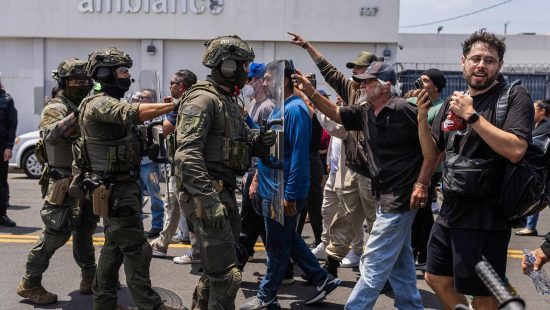
A series of narco-blockades, vehicle fires, and the deployment of tire-puncturing devices brought traffic to a standstill on the morning of Wednesday, November 18, across at least five municipalities in northern Veracruz. The events led to the suspension of public transportation, the precautionary closure of businesses and schools, and a large-scale deployment of federal and state security forces.
According to police and emergency response reports, the simultaneous attacks took place in the municipalities of Poza Rica, Papantla, Tihuatlán, Tuxpan, and Cazones de Herrera—with additional reports of vehicles damaged by metal spikes near Coatzintla.
In these locations, armed individuals scattered tire-puncturing devices across the roadway to stop motorists and transport vehicles. They forced drivers to exit their private cars and taxis before setting the vehicles on fire to obstruct the roads.
In Poza Rica, critical points were concentrated at the Cazones 1 and Cazones 2 bridges—the city’s main entry points—as well as at the entrance to the La Florida residential area on the road toward Tihuatlán, the exit toward Papantla, the Rancho El Rodeo sector, and the area near kilometer 47.
Concurrently, obstructions were reported on the Cazones 4 bridge along the Tuxpan–Totomoxtle highway, on Ejército Mexicano Avenue in Tihuatlán, and along the Poza Rica–Cazones and Poza Rica–Papantla highways. The Secretariat of Public Security (SSP) of Veracruz reported that, in the early hours of Wednesday, three vehicles were found set on fire in Poza Rica—though local reports documented at least six strategic locations affected across the region. According to the preliminary assessment, there were no injuries or fatalities.
Personnel from the Mexican Army, the National Guard, the State Police, and municipal forces—working in coordination with Civil Protection and the fire department—responded to the various sites to extinguish the fires, remove the burned-out vehicles, and clear away tire-puncturing devices in order to restore traffic flow.
According to security sources, this series of “narco-blockades” appears to be a violent reaction by organized crime to an operation launched by federal forces in this oil-producing region—an area currently contested by the Jalisco New Generation Cartel (CJNG) and local criminal cells. However, authorities have not yet officially confirmed the capture of any specific criminal targets, nor has the State Attorney General’s Office (FGE) issued a definitive report identifying those responsible.