New polling from leading research organizations shows overwhelming Latino support for voter ID laws — even as debates over access, security, and federal legislation intensify nationwide.

New national polling suggests a large majority of Latino voters support voter identification requirements — a finding that complicates long-standing assumptions in Washington about where the community stands on election policy.
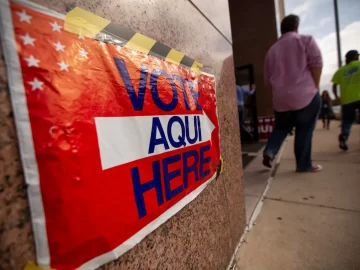
According to recent data reported by the Pew Research Center and Gallup, between 82% and 84% of Hispanic adults say they favor requiring a government-issued photo ID to vote. Similar shares support requiring proof of citizenship when registering.
Those numbers closely mirror support among the general U.S. population.
For lawmakers debating federal proposals such as the Safeguard American Voter Eligibility Act (SAVE Act), the polling signals that voter ID — as a concept — polls strongly across racial and ethnic groups.
Political analysts say the data reflects multiple factors.
First, voter ID laws are already in place in most states in some form. For many Americans — including naturalized citizens — presenting identification is a routine part of daily civic life, from boarding flights to accessing government services.
Second, broader concerns about election integrity continue to shape public opinion, even though repeated investigations have found no evidence of widespread voter fraud in recent federal elections.
Polling experts caution that wording matters. Surveys typically ask about showing photo identification to vote — a narrower policy than more restrictive proposals that may require specific forms of documentation.
The policy vs. the impact
Civil rights groups and voting-rights advocates argue that strict implementation can still create barriers, particularly for seniors, low-income voters, or people who lack access to underlying documents such as birth certificates.
Research from academic institutions and legal advocacy organizations has found that obtaining documentation can involve fees, transportation challenges, or administrative delays — hurdles that can disproportionately affect communities with fewer resources.
At the same time, Latino political behavior is not monolithic. Support for voter ID does not necessarily translate into support for every election-related bill or enforcement mechanism. Nor does it override concerns about ballot access, long lines at polling places, or language accessibility — issues that continue to affect Latino voters in multiple states.
For both major parties, the takeaway is clear: Latino voters are pragmatic and issue-driven. Broad support for voter ID laws does not fit neatly into partisan narratives.
As Congress and state legislatures revisit election rules ahead of the next national cycle, policymakers will likely face a balancing act — responding to strong public support for identification requirements while ensuring compliance with federal voting rights protections and constitutional safeguards.
For Latino voters, the core principle remains consistent: elections must be both secure and accessible. The challenge for elected officials is delivering both — without forcing communities to choose between them.