Reporting Highlights:
Kids in Custody: This year ICE has sent more immigrant children into the federal shelter system than in the previous four years combined. New data suggests families are being separated.
Florida Cooperation: The pipeline from traffic stops to federal shelters is evident in Florida, where thousands of state and local police are deputized to enforce federal immigration laws.
Stuck in the System: Under Trump, kids’ average stay in federal custody is nearly six months — up from a month under Biden. Long stays are leading some children to lose hope.
(ProPublica is a nonprofit newsroom that investigates abuses of power. )
It was Friday, June 6, and the rent was due. As soon as she finished an errand, Imelda Carreto planned on joining her family as they gathered scrap metal to earn a little extra cash. Her fiancé, Julio Matias, and 15-year-old nephew, Carlos, had set out early, hitting a trailer to the back of their beat-up gray truck.
Shortly after 8 a.m., Carreto’s phone range. It was Carlos, telling her an officer with the Florida Highway Patrol had pulled over the truck on Interstate 4 near Tampa. The stated reason: cracks in their windshield. But Carreto was worried. She knew Florida police were collaborating with federal immigration authorities. Her fiancé was undocumented. She says she rushed to the scene and made it there just before the immigration officers.
As she feared, Matias had been detained. But to her surprise, so had Carlos. He was just a kid. (ProPublica is only identifying Carlos by his first name because he is a minor.) Carlos was in high school. He’d been living in the United States for over two years and was working toward applying for legal status to stay long term. The government had given her, a legal resident, custody of him. Now he was in handcuffs. Why would they take him too?
Carreto didn’t carry any proof that she had custody of the boy. She had left it in another car in her rush. She recalls officers saying her nephew would likely be released to her in a few days once she presented the proper documents. Before they drove him away, Carlos started to tear up. Carreto told him, “Don’t cry. I don’t know how, but I’ll get you back. Understand?”
A cracked windshield, a waiting officer, a forgotten document: The new family separations often start in the most mundane ways.
Seven years ago, during the first administration of President Donald Trump, children were taken from their families the moment they crossed the border into the United States. Under a policy of zero tolerance for illegal crossing, Customs and Border Protection officers detained adults while children were sent into the federal shelter system. The aim: to determine other families from following. But after widespread public outcry and a lawsuit, the administration ended it. Today, family separations are back, only now they are happening all across the country. The lawsuit against the zero tolerance policy resulted in a 2023 settlement that limits separations at the border, but it does not address those that occur inside the country after encounters with Immigration and Customs Enforcement, or ICE. Advocates fear the administration is conducting the new separations for the same reasons as before: to deter new immigrants from coming and to terrify those who are here into leaving.
Since the start of this year, some 600 immigrant children have been placed in government shelters by ICE, according to government data. That figure, which has not been previously reported, is already higher than the tally for the previous four years combined. And it is the highest number since recordkeeping began a decade ago.

ProPublica pieced together additional information for around 400 children sent to shelters by examining state and federal records and conducting dozens of interviews with current and former government officials, advocates, attorneys and immigrant families.
Around 160 of the cases that we learned about involved child welfare concerns, which current and former officials say is typical of the children ICE has sent to shelters in the past. These cases include instances of children who were encountered alone inside the country or were considered potential victims of domestic abuse or trafficking, or instances where minors or the adults they were with had been accused of committing a crime.
But in a majority of the cases we examined, kids ended up in shelters in ways government officials say they would never have in the past: after routine immigration court hearings or appointments, or because they were at a home or a business when immigration authorities showed up to arrest someone else.
In South Carolina, a Colombian family of five went to a government office for a fingerprinting appointment, only to have the parents detained while the children — ages 5, 11 and 15 — were sent into the shelter system for four months. In South Florida, a 17-year-old from Guatemala was taken into custody because officers couldn’t make contact with his dad after a traffic stop; his dad is deaf. In Maryland, a 17-year-old from Mexico ended up in a shelter after making a wrong turn onto military property.
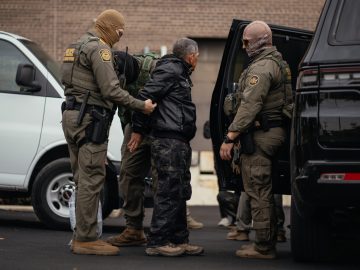
In around 150 cases, children were taken into federal custody after traffic stops. The trend is especially noticeable in states like Florida, where thousands of state and local police, including highway patrol, have been deputized to enforce immigration laws.
“What’s happening to kids now is like many small zero tolerances,” said Marion “Mickey” Donovan-Kaloust, director of legal services at the Los Angeles-based Immigrant Defenders Law Center. This and other changes affecting immigrant children are “adding up to a huge trauma.”
Most of the cases we found involve teenagers, and many of them had been in the United States for years. In those cases, being sent to a shelter can mean separation not only from their families but from schools, friends, churches, doctors and daily routines.
Once children are in shelters, the government is making it harder and harder for relatives or other adults who act as sponsors to get them back. The average length of stay has grown to nearly six months, up from one month during the presidency of Joe Biden, public data shows.
White House spokesperson Abigail Jackson said in a written statement that the Biden administration released immigrant kids to sponsors too quickly and without proper vetting, sometimes into unsafe situations. “The Trump Administration is ensuring that unaccompanied minors do not fall victim to the same dangerous conditions,” Jackson said.
Department of Homeland Security spokesperson Tricia McLaughlin, speaking for ICE, said the agency “does not separate families” and instead offers parents the choice to have their children deported with them or to leave the children in the care of another safe adult, consistent with past practices.
Asked about Carlos’ detention in Florida, McLaughlin said that traffic stops by officers trained to partner with ICE have prevented abuse
of immigrant children and “resulted in arrests of human traffickers, abusers, and other criminals.”
ProPublica found no evidence of Carreto or Matias, her fiancé, being accused or convicted of serious crimes. Carreto had been found guilty of driving without a license at least twice and had gotten a speeding ticket. Matias pleaded guilty to a 2011 taillight infraction. He now has an ongoing case for driving without a license from the traffic stop with Carlos, and he has been returned to Guatemala.
A Family Divided: Deported Parents Race to Reunite With Their Children