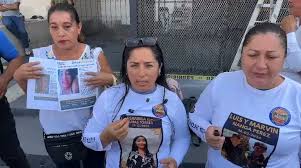
As allegations of medical neglect and excessive force mount, deaths at the nation’s largest migrant detention camp expose deep failures in oversight and care.
Camp East Montana, the largest migrant detention center in the United States when at full capacity, has become the epicenter of a humanitarian crisis. This week, it was revealed that a third detainee has died in just 44 days at the hastily erected tent complex — operated by a private firm with no prior experience in the field — in the desert surrounding the Fort Bliss military base outside El Paso, on the Texas-Mexico border. The death, which occurred last week, follows two others that have prompted allegations of medical negligence, mistreatment, excessive use of force by staff, and, in one case, suspicions of homicide.
The most recent victim was identified as Víctor Manuel Díaz, a 36-year-old Nicaraguan. According to a statement from Immigration and Customs Enforcement (ICE), Díaz was found unconscious in his room and pronounced dead at 4:09 p.m. last Wednesday. Authorities have declared it a suicide, although the official cause of death remains under investigation. Díaz had recently been detained in Minneapolis during the large-scale immigration operation that has shaken the city since early January, before being transferred to Texas.
Díaz’s death is in addition to two previous fatalities that have once again highlighted the dire conditions at Camp East Montana, which houses more than 2,900 people, despite having a capacity of 5,000, according to the latest reports. Last December, Francisco Gaspar-Andrés, a 48-year-old Guatemalan, died at Providence East Hospital in El Paso. Authorities stated that the cause of death was still under investigation, although doctors initially attributed it to “natural liver and kidney failure.”
On the other hand, Geraldo Lunas Campos, a 55-year-old Cuban and father of four, died on January 3. The circumstances surrounding his death have been disputed between the official version — which changed over the course of several days — and testimonies and the initial autopsy report. ICE initially stated that Lunas Campos had experienced “medical distress” while in isolation after “exhibiting disruptive behavior while waiting in line for medication and refusing to return to his assigned dormitory.”
They also claimed that medical personnel initiated life-saving measures, but that Lunas Campos was pronounced dead by emergency medical services. However, after the first allegations of homicide surfaced, the Department of Homeland Security asserted that Lunas Campos had attempted to take his own life and that facility staff tried to stop him.
Testimonies from other detainees tell a different story. A witness told the Associated Press and the Washington Post that Lunas Campos died after being handcuffed, tackled by guards, and subjected to a chokehold until he lost consciousness. His last words were, “I can’t breathe,” Santos Jesús Flores told national media outlets. Furthermore, the El Paso County Medical Examiner’s Office informed Lunas Campos’s family that a preliminary autopsy report classified the death as a homicide, resulting from asphyxiation by compression of the chest and neck.