That catchy nickname is based on real science. Here’s what your calf muscles actually do and why it matters more as you age.
Your calf muscles probably aren’t something you think about very often.
They help you walk. They help you stand. They help you push off the ground.
But they are also part of a remarkable system that helps move blood out of your lower legs and back toward your heart.
That’s why you’ve probably heard the phrase “second heart.”
The nickname is catchy. The science behind it is real—but not quite in the way social media often suggests.
Your calves aren’t another heart.
They are a muscle pump.
And that pump may matter more to healthy aging than the nickname itself.
Your calves help fight gravity
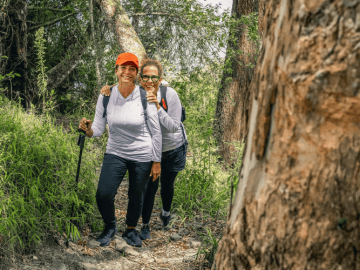
Every time you walk, your calf muscles contract.
Those contractions squeeze veins in your lower legs, helping push blood upward. One-way valves inside the veins help keep that blood from flowing backward.
Researchers call this the calf-muscle pump.
An anatomical study published in Phlebology examined 400 cadaveric limbs and found that the calf pump is the most powerful of the lower-limb venous pumps. The soleus and gastrocnemius, the two major muscles that make up your calf, play important roles in the system.
Think of it as your legs helping your heart do its job.
But don’t think of it as a second heart.
The 65% claim needs a little context
You may also encounter a statistic saying the calf muscle pump can increase blood return to the heart by 65%.
There’s an important catch.
Research has described a calf-muscle pump ejection fraction of roughly 65% in healthy people. That’s a measure of how much blood in the relevant venous compartment can be ejected by the pump—not proof that walking increases blood returning to your heart by 65%.
It’s a good example of how an interesting scientific finding can become an exaggerated health claim once it reaches the internet.
What happens when you stop moving?
The calf pump depends on movement.
When you sit still for long periods, your calf muscles aren’t contracting in the same way they do when you walk.
That doesn’t mean every long period of sitting will cause a blood clot. But prolonged immobility is a recognized risk factor for venous problems, and movement helps maintain normal circulation through the legs.
Research on people with chronic venous insufficiency has also found that exercise can improve measures of calf-pump function.
That’s useful information.
But it does not mean calf raises prevent deep-vein thrombosis, or DVT.
If you have leg swelling, pain, unexplained shortness of breath or other symptoms that could indicate a medical problem, don’t try to solve it with an exercise routine. Seek medical care.
Here’s where the story gets more interesting: aging
The bigger reason to pay attention to your calves may have less to do with your heart and more to do with your ability to keep moving.
Your calf muscles help you push off when you walk. They work with your feet, ankles, knees, hips and core to keep you stable.
As we age, maintaining that system becomes increasingly important.
Researchers have long used walking speed as a practical measure of physical function in older adults. A systematic review found gait speed to be a quick, reliable measure of functional capacity and an indicator associated with important health outcomes.
That doesn’t mean walking slowly causes poor health.
It means the way you walk can provide clues about how well your body is functioning.
And that makes your lower legs more interesting than they might seem.
Strong calves aren’t a magic health shield
Here’s another place where online health advice can go too far.
A 2025 systematic review involving more than 8,000 community-dwelling older adults found that lower-limb power was associated with future falls. But the researchers also cautioned against treating the strength of one particular muscle group as the whole story.
Your calves matter.
So do your thighs, hips, ankles and feet.
Balance matters.
Coordination matters.
Your nervous system matters.
The goal isn’t to build superhero calves.
It’s to keep the whole system working.
That’s a particularly important distinction as we think about aging. Parriva has previously explored the importance of changing how we think about getting older; maintaining mobility is another part of that bigger conversation about aging well. Parriva’s Health coverage
And what about your brain?
This is where we should be especially careful.
You’ve probably seen claims that calf muscles improve brain blood flow or protect against cognitive decline.
That’s not established.
There is, however, evidence connecting walking ability and cognitive health.
A meta-analysis of 36 studies involving nearly 30,000 people found that slower gait speed was associated with worse cognitive function in older adults. NIH research on gait speed and cognitive function
But an association isn’t proof that weak calves cause cognitive decline—or that strengthening your calves will prevent it.
The better takeaway is simpler:
Physical mobility and cognitive health are connected, but science has not shown that your calf muscles are protecting your brain.
So what should you actually do?
Don’t obsess over the “second heart.”
Instead, keep your body moving.
Walk when you can.
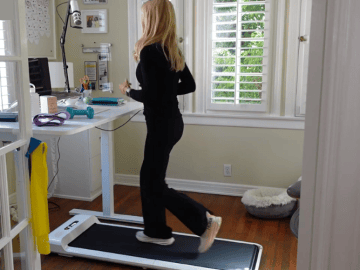
Break up long periods of sitting.
Maintain lower-body strength.
Work on balance and mobility as you get older.
And don’t focus on one muscle at the expense of the rest of your body.
Research suggests that resistance and other forms of exercise can improve walking ability in older adults, reinforcing the idea that healthy mobility is about maintaining the whole system—not finding one miracle exercise.
So, are your calves really your “second heart”?
Not literally.
But the nickname describes something important.
Your calf muscles are part of a powerful pump that helps move blood through your lower legs. They also help you walk, push off, stabilize yourself and remain mobile.
And as you age, those everyday abilities matter.
The real lesson isn’t that you need to perform hundreds of calf raises.
It’s that movement itself is one of the body’s most useful tools.
Your calves are simply one of the places where that lesson becomes visible.
And the next time you get up and take a walk, those two muscles at the back of your legs will be doing considerably more than just moving your feet.