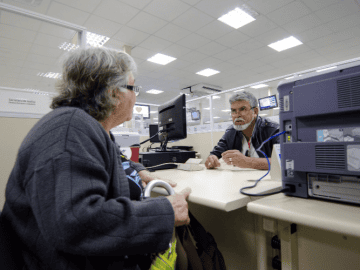
A new study finds that many formerly incarcerated people return home with little employment history outside prison, making stable work and economic mobility difficult to achieve.
For many Californians leaving prison, the hardest challenge begins after release.
Finding a job is often presented as the first step toward rebuilding a life, but new research shows that many formerly incarcerated people enter the workforce with a major disadvantage: they may have little or no employment history outside prison.
Nearly half of formerly imprisoned people nationwide never had a job outside prison. About one-quarter had no recorded employment before, during, or after incarceration. While 44 percent were employed after release, many continued to face low wages, unstable work, and limited opportunities for economic advancement.
The data reveals a broader reality: incarceration is not only a criminal justice issue. It is also an employment and economic mobility issue.
California’s Reentry Challenge: Finding Work After Prison
California releases thousands of people from state prisons and local correctional systems every year. For many, returning home means facing a difficult labor market while carrying a criminal record, limited job experience, and financial instability.
Research shows that employment before and after incarceration is often concentrated in low-skill and low-wage jobs.
Before prison, about one-third of working individuals held temporary jobs. After release, that number increased to 42 percent. Even prison employment, while providing structure and routine, often involved short-term assignments focused on prison operations such as food services, cleaning, and maintenance.
These jobs can provide work experience, but they do not always translate into stable careers after release.
Employment Does Not Always Mean Economic Stability
One of the biggest challenges facing formerly incarcerated people is that finding a job does not necessarily mean escaping poverty.
Before incarceration, only 28 percent of working individuals earned above the poverty threshold in at least one year. After release, that number increased to 45 percent.
The improvement is significant, but many people still struggle to achieve financial security.
Formerly incarcerated workers often face barriers that other job seekers do not, including:
employer background checks,
limited professional networks,
gaps in employment history,
restrictions related to certain licenses or occupations.
For many, a criminal record becomes an additional obstacle in an already competitive labor market.
The Latino Experience: A Major Part of California’s Reentry Story
The impact of incarceration is especially important to understand in California’s Latino communities.
Latinos represent one of the largest demographic groups in California and are also significantly represented among people impacted by the criminal justice system. The effects of incarceration extend beyond individuals returning home; they affect families, household income, and long-term economic stability.
For Latino families, incarceration can create financial pressure through lost wages, disrupted employment, and reduced opportunities for wealth building.
A person’s ability to find stable work after prison can influence more than their own future. It can affect housing stability, family responsibilities, and the economic trajectory of entire households.
The Economic Question After Incarceration
The central question is not simply whether formerly incarcerated people can find jobs.
The deeper question is whether the jobs available allow them to rebuild.
California’s economy depends on millions of workers, but economic mobility requires more than employment alone. It requires access to jobs that provide reliable income, opportunities for advancement, and a realistic path toward stability.
For many formerly incarcerated Californians — including many within Latino communities — the challenge is not only returning home.
It is finding a way back into the economy.