Medi-Cal renewal California 2026 is becoming a critical issue as new policy changes, confusion, and fear leave many Latino families at risk of losing essential health coverage.
OPRIMA AQUI PARA ESPAÑOL
For Jesús Velasco, health is not something to be taken lightly—it is a universal right that everyone should have access to. That is why the Medi-Cal renewal process for thousands of patients is a matter of great importance.
This year, the implementation of new federal and state healthcare budget measures has led many Medi-Cal users to consider postponing—or even skipping—their coverage renewal.
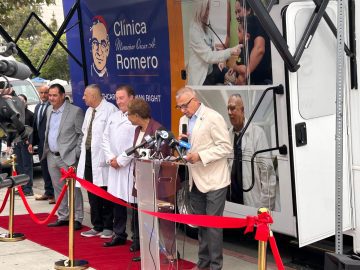
“In recent months, we’ve seen this trend emerge: the urgency of renewing Medi-Cal to continue accessing basic and emergency services. A large number of our patients still haven’t come in. That’s why we’ve implemented different strategies to remind them not to leave this process pending, as they risk losing their coverage,” explains Velasco, director of the Enrollment Department at Clínica Romero.
Starting in 2026, Medi-Cal in California introduced significant changes, including a freeze on new full-scope enrollments for undocumented adults, the reinstatement of asset limits for individuals over 65 or with disabilities, and restrictions on certain adult dental benefits. Although most current beneficiaries maintain their services, the situation has created uncertainty.
“It’s unfortunate because many services have been lost for the undocumented population. While emergency services are still accessible, there are other areas where people are left unprotected. That’s why we strongly urge them to renew as soon as possible,” he adds.

Another challenge is the frequency of the process. Currently, renewal must be completed once a year, which already presents difficulties. “The Latino community often postpones these types of procedures,” Velasco notes. Starting in 2027, the process will need to be completed twice a year, which could make things even more challenging.
Velasco also identifies several reasons behind the low renewal rates. One is the confusion caused by the yellow envelope in which renewal documents are mailed. Many people receive it but do not fill it out immediately or set it aside, failing to recognize the urgency.
Another major factor is fear related to immigration enforcement. Some individuals avoid going to clinics because they are afraid of being exposed.
To address these challenges, Clínica Romero has implemented various strategies. “We have a call center that contacts people who are at risk of losing their coverage. We guide them step by step, and if they are afraid to leave their homes, we explain how to complete the process remotely. The documents include a prepaid return envelope—they simply need to mail it,” he explains.
In addition, the clinic has distributed informational flyers in different neighborhoods, sends text message reminders to beneficiaries, and organizes community events focused on Medi-Cal renewals.
According to Velasco, the process itself is not complicated: “With a little guidance, the forms are easy to complete. The important thing is not to ignore them. The community has an ally in us to help them through this process,” he concludes.
📅 Medi-Cal Re-Enrollment Events
🗓 Saturday, April 11
⏰ 9:00 a.m. – 2:00 p.m.
📍 123 S. Alvarado St., Los Angeles, CA 90057
👉 Bring your yellow envelope and proof of income
🗓 Saturday, May 16
⏰ 9:00 a.m. – 2:00 p.m.
📍 2032 Marengo St., Los Angeles, CA 90033
📞 For more information: (213) 989-7700 ext. 1003
Key Medi-Cal Changes for 2026–2027
Undocumented Immigrants (Age 19+)
Starting January 1, 2026, new enrollments for full-scope coverage will be frozen. Individuals will only have access to emergency Medi-Cal or prenatal care unless they were already enrolled. Undocumented children will remain eligible.
Asset Limits
Asset testing will be reinstated for individuals age 65 and older or those with disabilities. This includes savings, additional vehicles, and property. The limit will be $130,000 for individuals and $195,000 for couples.
Dental Benefits
Beginning July 1, 2026, full dental coverage will be eliminated for many adults with unsatisfactory immigration status (including green card holders with less than five years of residency). Coverage will be limited to emergency services only.
Work Requirements (Coming Soon)
Starting January 1, 2027, some adults ages 19 to 64 will be required to work, volunteer, or attend school in order to maintain coverage.
Eligibility Reviews
As of January 2027, eligibility will be reviewed twice a year instead of once.