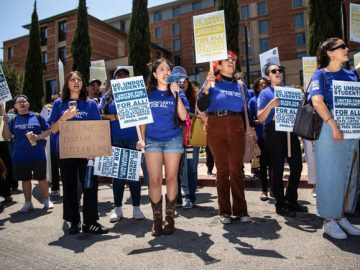
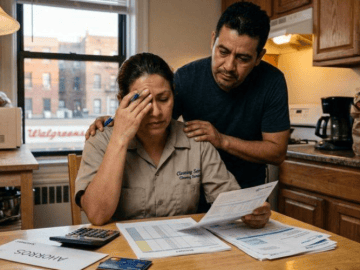
California gas tax relief 2026 debate intensifies after SB 1035 fails, as rising fuel costs reshape economic pressure and political priorities for Latino voters.

As California heads toward the 2026 election cycle, one issue is cutting through political messaging and hitting families directly: the price of gas. And for many Latino voters, frustration is turning into a political signal.
As previously reported by Parriva, polling shows Latino voters are increasingly disillusioned with the pace of action on cost-of-living issues. Now, the collapse of Senate Bill 1035—a proposal to temporarily suspend the state gas tax—has intensified that frustration, raising new questions about how economic pressure could shape voter behavior.
The bill, backed by State Sen. Tony Strickland, aimed to reduce gas prices by roughly $1 per gallon for one year. But it failed to advance after being rejected by Democrats on the Senate Environmental Quality Committee, underscoring deep divisions over how to balance affordability with long-term infrastructure funding.
Opponents, including Gov. Gavin Newsom, argue that suspending the gas tax would undermine critical investments in roads, public transit, and climate resilience. Instead, Newsom has prioritized policies targeting oil company profits, including enforcement mechanisms tied to the state’s fuel price transparency and profit cap law.
While gas prices affect all Californians, the impact is not evenly distributed. Data from the U.S. Energy Information Administration consistently shows California leading the nation in fuel costs—often by a wide margin.
For working-class Latino communities, the burden is heavier.
In regions like South Los Angeles, the Inland Empire, and the Central Valley, many workers depend on long commutes or vehicle-based jobs in construction, logistics, and delivery. Higher fuel costs effectively act as a regressive tax, consuming a larger share of household income.
“When gas goes up, everything goes up,” said one Los Angeles-based small business owner interviewed by Parriva in earlier reporting. “It’s not just the tank—it’s food, rent, and survival.”
Political Risk Ahead of 2026
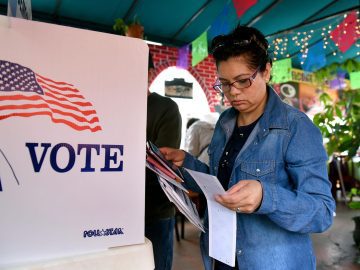
The failure of SB 1035 comes at a politically sensitive moment. Latino voters—who represent a growing share of the electorate—are increasingly prioritizing economic stability over ideological debates.
According to recent analyses cited by institutions like the Public Policy Institute of California, cost of living consistently ranks among the top concerns for Latino households, often above healthcare and education.
That shift could have electoral consequences.
Some candidates, including former Los Angeles Mayor Antonio Villaraigosa, have begun proposing broader suspensions of fuel-related policies, while others are exploring direct rebates or tax adjustments.
Meanwhile, alternative proposals like Assembly Bill 1745 aim to revive the idea of temporary gas tax relief, signaling that the debate is far from over.
Even without new policy changes, experts warn that gas prices could continue climbing.
Global instability—particularly tensions affecting oil supply routes—has already pushed crude prices higher. At the same time, California faces structural challenges: limited refinery capacity, planned facility closures, and the annual switch to more expensive summer-blend gasoline.
The California Energy Commission has also noted that long-term climate policies, while critical for emissions reduction, can contribute to higher short-term fuel costs as the state transitions away from fossil fuels.
For Latino families, this is not an abstract policy debate—it’s a daily calculation.
The question now is whether policymakers can respond quickly enough to address the pressure. If not, gas prices may become more than just an economic issue—they could become a decisive political force shaping California’s future.
And in a state where Latino voters hold growing influence, that shift may already be underway.