Texas primaries Latino voters 2026 could determine whether Republican gains among Hispanic Texans after 2024 signal lasting political realignment or a temporary shift.
The Texas primaries could provide an early test of whether Latino support for the Republican Party is holding after significant GOP gains in 2024. As Latino voters continue to grow in influence across Texas elections, political analysts are closely watching primary turnout and voter behavior to gauge whether this key swing voting bloc remains aligned with Republicans.
Latino voters played a pivotal role in President Donald Trump’s 2024 reelection campaign, helping Republicans secure victories in historically competitive areas, particularly along the southern border of Texas. Those gains were instrumental in reshaping the state’s congressional districts, as Republicans redrew five seats with the expectation of continued Latino voter support, flipping three in their favor.
However, recent political trends suggest that Latino voters in Texas and nationwide may be reconsidering their support for the GOP. Political experts say the 2026 Texas primary elections could offer fresh insight into whether Latino swing voters are shifting back toward Democrats or maintaining their Republican alignment.
Brandon Rottinghaus, a political science professor at University of Houston, notes that Latinos represent one of the youngest and fastest-growing voting populations in Texas. Importantly, this demographic has not shown consistent loyalty to either major political party.
“The Latino electorate has emerged as the biggest swing vote in Texas because they are willing to side with either party, depending on the kinds of issues presented by candidates,” Rottinghaus said.
Economic issues and immigration policy were top concerns that drove many Texas Latinos to support Trump and Republican candidates in 2024. But ongoing inflation, high living costs, and economic uncertainty could present challenges for Republicans currently in power.
“There’s a sense that Republicans may have squandered an opportunity to solidify Latino support for several election cycles,” Rottinghaus explained.
Daniel Garza, president of The LIBRE Initiative, an organization focused on mobilizing Latino voters in support of conservative policies, believes the economy will remain the deciding factor in upcoming elections. He argues that issues such as job growth, inflation control, gas prices, energy production, and healthcare affordability will heavily influence Latino voter turnout and party preference.
Garza points to signs of economic stabilization, including easing inflation, increased energy production lowering gas prices, and declining interest rates that may improve homeownership prospects. He believes Republican candidates can build on these economic talking points to maintain Latino voter support in Texas and across the United States.
Immigration enforcement, however, could complicate the political landscape. Rottinghaus suggests that concerns about U.S. Immigration and Customs Enforcement (ICE) deportation practices may be creating unease among some Latino voters. Questions about civil rights, personal safety, and community impact could influence participation in the Texas primaries.
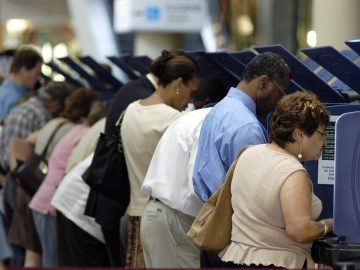
Because Texas operates under an open primary system, any eligible voter can choose to participate in either the Democratic or Republican primary. Analysts are watching turnout trends in heavily Latino counties to determine whether more voters are selecting Democratic ballots, which could signal renewed competitiveness for Democrats in key districts.
As the Texas primary elections unfold, they may offer one of the first indicators of whether Latino Republican support after the 2024 election was a lasting political realignment or a temporary shift driven by specific economic and immigration concerns.
Latino Voters Dump Trump After the Shortest Honeymoon in Political History