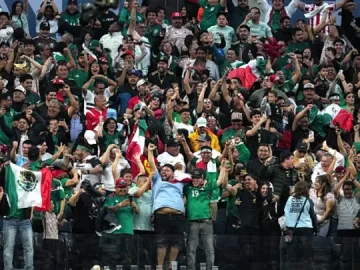
With global scrutiny intensifying after cartel violence in Jalisco, Mexico’s World Cup 2026 security strategy now carries economic, political, and diaspora-wide implications.

With the 2026 FIFA World Cup just months away, Mexico faces a high-stakes security test. The recent operation targeting Nemesio “El Mencho” Oseguera Cervantes — longtime leader of the Jalisco New Generation Cartel (CJNG) — has intensified global scrutiny over whether host cities like Guadalajara can guarantee safety when the world arrives.
The Mexican government has not officially linked the operation to World Cup preparations. But international coverage, including reporting by The New York Times, Reuters and Al Jazeera, has highlighted the timing: a major cartel strike months before Mexico co-hosts the largest sporting event on the planet alongside the United States and Canada.
For Mexico — and for millions of Mexican Americans planning to attend — the question is bigger than logistics. It’s about national credibility.
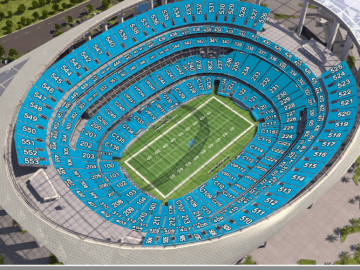
President Claudia Sheinbaum has framed the security response as proof of operational strength, publicly guaranteeing “no risk” to fans attending matches in Guadalajara. The city will host four World Cup games at Estadio Akron in June 2026.
Analysts quoted in international outlets suggest multiple motivations behind the intensified crackdown:
-
Preventing a high-profile security incident during a globally televised event.
-
Responding to U.S. pressure related to fentanyl trafficking and trade tensions.
-
Demonstrating state authority over CJNG strongholds in Jalisco.
The administration has treated the tournament as a matter of national security for over three years, coordinating closely with FIFA, according to reporting from Reuters.
Despite recent retaliatory violence in Jalisco, FIFA has not moved or canceled the scheduled matches. However, reporting from The New York Times indicates that security protocols are under active review.
Mexican authorities have launched a multi-layered response:
Military Reinforcement
An additional 2,500 troops have reportedly been deployed to stabilize key areas, dismantle roadblocks, and secure transport corridors.
High-Tech Surveillance
Local and federal officials are expanding AI-powered camera systems, drone detection technology, and restricted airspace enforcement around stadiums and Fan Fest zones.
Border & Travel Controls
Authorities are tightening entry screenings to prevent criminal infiltration during the tournament.
Guadalajara’s World Cup infrastructure will be tested early. Estadio Akron is scheduled to host international playoff matches in March, effectively serving as a live security rehearsal before June.
While Mexican officials emphasize stabilization, the U.S. Department of State has advised caution for U.S. citizens in Jalisco. Travelers are encouraged to enroll in the Smart Traveler Enrollment Program (STEP) to receive embassy alerts.
That dual reality — official assurances alongside international advisories — underscores the tension surrounding Mexico’s readiness.
For Mexico and the broader Latino diaspora in the United States, the 2026 World Cup is more than sport. It is economic opportunity, cultural pride, and global visibility. Guadalajara alone expects hundreds of thousands of visitors, injecting significant revenue into local businesses, hospitality, and tourism.
But credibility is currency. The world will not only watch the matches — it will assess governance, coordination, and resilience.
Mexico now faces a defining moment: prove that security reforms are structural, not temporary. If successful, Guadalajara could transform a moment of crisis into proof of capability.
If not, the consequences will extend far beyond the pitch.
A Love Letter from Mexico: El Mencho, Gentrification, and a Country Few Truly Understand