As the Kaiser Permanente AI strike enters another week, union workers warn automation could reshape healthcare jobs, patient safety, and labor protections across California.
Workers of one of the most powerful unions in California are forming an early front in the battle against artificial intelligence, warning it could take jobs and harm people’s health.
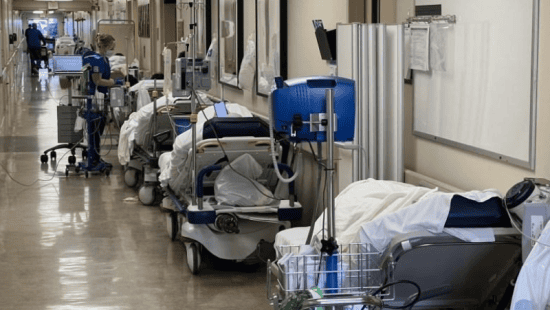
More than 31,000 Kaiser Permanente health care workers remained on strike this week as the open-ended walkout entered its fourth week, disrupting patient appointments, surgeries and treatments across California and Hawaii.
As part of their ongoing negotiations with their employer, Kaiser Permanente workers have been pushing back against the giant healthcare provider’s use of AI. They are building demands around the issue and others, using picket lines and hunger strikes to help persuade Kaiser to use the powerful technology responsibly.
Kaiser says AI could save employees from tedious, time-consuming tasks such as taking notes and paperwork. Workers say that could be the first step down a slippery slope that leads to layoffs and damage to patient health.
“They’re sort of painting a map that would reduce their need for human workers and human clinicians,” said Ilana Marcucci-Morris, a licensed clinical social worker and part of the bargaining team for the National Union of Healthcare Workers, which is fighting for more protections against AI.
The 42-year-old Oakland-based therapist says she knows technology can be useful but warns that the consequences for patients have been “serious” when AI makes mistakes.
Kaiser says AI can help physicians and employees focus on serving members and patients.
“AI does not replace human assessment and care,” Kaiser spokesperson Candice Lee said in an email. “Artificial intelligence holds significant potential to benefit healthcare by supporting better diagnoses, enhancing patient-clinician relationships, optimizing clinicians’ time, and ensuring fairness in care experiences and health outcomes by addressing individual needs.”
AI fears are shaking up industries across the country.
Medical assistants are among the most exposed to AI, according to a recent administrative study by Brookings and the Center for the Governance of AI. The assistants do the type of work that AI is getting better at. Meanwhile, they are less likely to have the skills or support needed to transition to new jobs, the study said.
There are millions of other jobs that are among the most vulnerable to AI, such as office clerks, insurance sales agents and translators, according to the research released last month.
In California, labor unions this week urged Gov. Gavin Newsom and lawmakers to pass more legislation to protect workers from AI. The California Federation of Labor Unions has sponsored a package of bills to address AI’s risks, including job loss and surveillance.
The technology “threatens to eviscerate workers’ rights and cause widespread job loss,” the group said in a joint letter with AFL-CIO leaders in different states.
Kaiser Permanente is California’s largest private employer, with close to 19,000 physicians and more than 180,000 employees statewide. It has a major presence in Washington, Colorado, Georgia, Hawaii and other states.
Kaiser already uses AI software to transcribe conversations and take notes between healthcare workers and patients, but therapists have privacy concerns about recording highly sensitive remarks. The company also uses AI to predict when hospitalized patients might become more ill. It offers mental health apps for enrollees, including at least one with an AI chatbot.