Foto: FIL/ MELINDA PAULINA LLAMAS
The general director of the Feria Internacional del Libro de Guadalajara is recognized for elevating Spanish-language publishing and strengthening Barcelona’s literary ties with Latin America.
We do not know each other personally—that I must clarify. I have interviewed her on three occasions, and each time she has left me with that feeling of wanting to know more about her experiences in the world of books, her interactions with great writers, and the headaches—because surely there must be some—in organizing the largest Spanish-language book fair in the world.
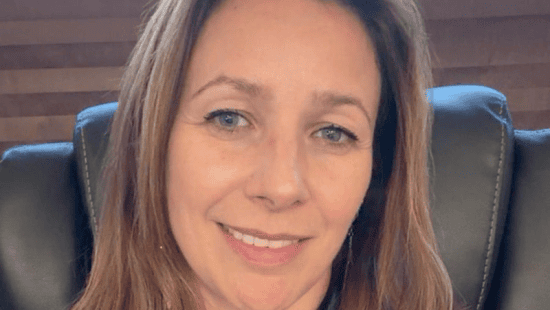
This Wednesday, Marisol Schulz will receive Barcelona’s Gold Medal for Cultural Merit in recognition of her distinguished professional career and her fundamental contributions to the world of books, publishing, and cultural promotion, as well as her close ties to Barcelona’s literary life.
I consider myself a good reader. I am passionate about a good book. I feel as if I am in paradise when I am in a space filled with books that tell all those stories that have populated this world. When I arrive at one of the editions of the Feria Internacional del Libro de Guadalajara, where Schulz serves as general director, I feel like a “child at Disneyland”—and forgive me for mentioning Disneyland. For days, I walk its corridors, smell and touch the books, and spend long minutes flipping through them, remembering those afternoons of my childhood when I couldn’t afford to buy them and would spend hours reading chapters of Don Quijote de la Mancha or Rojo y Negro, sitting on the floor of a bookstore.
Barcelona grants her this recognition, and I felt emotional—but also indignant—that Mexico has not yet honored her with any tribute. The Mexican cultural world is very peculiar, and it is painful to see these figures of our culture ignored by the establishment.
Schulz, despite her importance and position in the cultural world, has always been accessible for interviews. A woman who has sat at the table beside the giants of literature listens patiently and, without irritation or haste, answers the questions she is asked.
Perhaps it was shyness, but when I had the opportunity to approach her during the fair, I didn’t try. She stands at the center of this publishing event; while people come and go, she remains alert to every detail. According to her own words, she learned from the best—her mentor, Raúl Padilla, founder of the fair, who passed away a few years ago. I allow myself not to bother her. Simply by living—in every book, every corridor, every whisper—what she has built is enough.
“The year he (Raúl Padilla) died, during the organization of the fair, I still forgot that he was gone. I would pick up the phone and dial his extension,” she once told us.
“Reading has helped me understand the world,” she said in a previous interview.
Books have always accompanied her. She says she was very shy, so reading became a powerful companion for exploring her inner self.
“In the past, the free textbooks in Mexican schools were very good; that’s where I grew up. I was fascinated by reading them. You would find great authors and major works of literature,” she adds.
“This has been the case throughout my life. Books have been with me from different fronts. I’ve been an editor at a young age, an editorial director, and now I lead the LéaLA and FIL festivals,” she added.
Barcelona grants her this recognition, and I felt emotional—but also indignant—that Mexico has not yet honored her with any tribute. The Mexican cultural world is very peculiar, and it is painful to see these figures of our culture ignored by the establishment.
It’s not difficult to imagine her on a plane, in a café, or anywhere else, immersed in one book or another—discovering and sustaining those conversations that are always there.
Schulz does not believe people are reading less; she believes reading simply inhabits different spaces and platforms. People read in print, digitally, on computers. She herself reads across formats.
“I travel a lot, and it’s impossible to carry so many books. Because of the nature of FIL, I have to read constantly, so I carry my e-reader. The important thing is not to fear reading. So many worlds, so many realities are discovered, and we gain access to reflection. There are books for everyone—the right book for each person. A novel, a short story, an essay. There is always the perfect book; you just have to find it. I invite you to come to the festivals; a book, a writer, can change your life,” she says.
To her, the image she sometimes sees on airplanes is ironic.
“I’ve seen it!” she says. “There are people who prefer to spend three hours staring at the ceiling instead of reading a book. They do nothing during the trip. They stare at the space around them, at their own chests. Just imagine all the possibilities they’re missing by not opening a book.”
During the official announcement at the Guadalajara fair, Barcelona’s Councilor for Culture and Creative Industries, Xavier Marcé, emphasized that the recognition carries special meaning because it is granted by the city itself, as a gesture of gratitude for Schulz’s work in promoting reading and strengthening Barcelona’s global literary leadership. Pau González, councilor of the Barcelona en Comú municipal group, thanked Schulz for welcoming Barcelona as Guest of Honor at the fair and reiterated that “awarding someone who has done so much for reading across the planet is absolutely deserved.”
For Schulz, receiving this recognition from Barcelona is both gratitude and a seal of belonging to a city to which she owes so much.
“There is an undeniable bond between Barcelona and Latin American literature,” she affirmed, recalling that Barcelona has formed part not only of her “emotional and cultural DNA,” but also of Mexico’s and the entire region’s. The director of FIL has repeatedly noted that Barcelona was decisive in her cultural formation and reading life, and she has also remembered the family ties that connect her to the city, marked by exile and by the refuge Barcelona once offered her family.
And since we are speaking of imagination and fantasy, we may allow ourselves to picture Marisol Schulz walking through Barcelona’s narrow streets, looking here and there… perhaps searching for that Cemetery of Forgotten Books that Carlos Ruiz Zafón once wrote about.