New DOJ records show no wrongdoing by Todd Boehly — but they land amid long-standing concerns about the moral direction of Dodgers ownership.
When newly released U.S. Department of Justice documents surfaced in early 2026, naming Los Angeles Dodgers co-owner Todd Boehly in correspondence connected to Jeffrey Epstein, the immediate question was predictable: Was there wrongdoing?
The answer, based on the public record, is no. The documents show that Epstein requested an introduction to Boehly and that two business meetings were arranged in 2011, years after Epstein’s first conviction. There is no evidence Boehly was aware of, or connected to, Epstein’s criminal network. Multiple outlets reporting on the documents have emphasized that point clearly.
But for many Dodgers fans — particularly in Latino communities that form the cultural backbone of the franchise — that is not the end of the story. It is the continuation of one.
Because the real issue confronting the Dodgers is not whether any single owner crossed a legal line. It is whether ownership has repeatedly crossed a moral one.
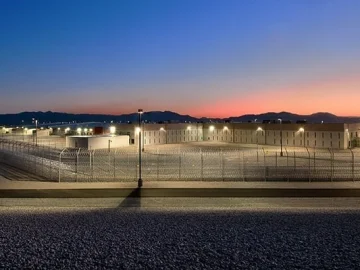
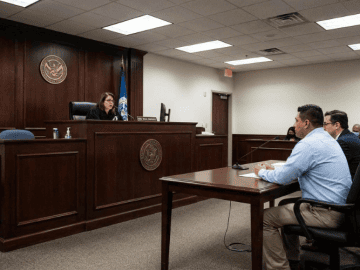
Boehly, a former managing partner at Guggenheim Partners and a minority owner of the Dodgers (with additional stakes in the Los Angeles Lakers and Chelsea FC), is now part of a broader ownership structure that has faced sustained scrutiny. As Parriva has reported, Dodgers ownership has maintained business ties that profit from immigration detention, private prison infrastructure, and surveillance — industries that disproportionately harm the very communities the team markets itself to.
That contradiction has been impossible to ignore.
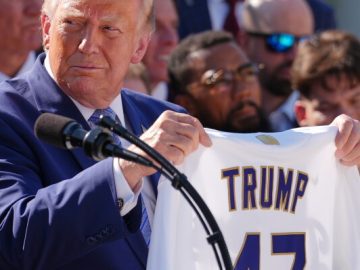
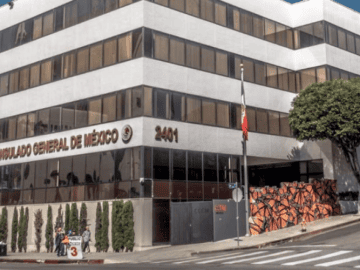
In recent years, Dodgers ownership has faced backlash for ties to GEO Group, one of the largest private prison and immigration detention contractors in the country. Other reporting has highlighted the team’s participation in ceremonial White House events even as immigration raids surged across Los Angeles neighborhoods where Dodgers hats are worn not as fashion, but as identity.
Against that backdrop, the Epstein documents land differently.
They do not accuse. They contextualize.
As immigration journalist Pablo Manríquez has written elsewhere, power in America is often revealed not through crimes, but through proximity — who has access, who is welcomed into rooms, who is treated as “just business” even after public disgrace. The Epstein files, released en masse by the DOJ, have done less to expose new crimes than to map the social architecture of elite insulation.
For Latino fans, that architecture is familiar.
The Dodgers’ public mythology is inseparable from immigrant labor — from Chávez Ravine to today’s stadium workforce, from street vendors outside the gates to families who pass fandom down generations. What feels increasingly broken is not that ownership is imperfect, but that it is unmoved.
No apology tour is required. No guilt needs to be assigned where none is alleged. But leadership does require reckoning — and so far, Dodgers ownership has offered silence where moral clarity is expected.
This is not about Epstein. It’s about pattern recognition.
And for a franchise that claims Los Angeles as its soul, the question remains unanswered: Who is this team willing to stand with — and who is it willing to profit from instead?