As the MacArthur Park City Council election dominates headlines, voters across Los Angeles District 1 say housing, immigration, and daily services risk being sidelined.
The election to choose the District 1 City Councilmember this coming June has been dominated by a single issue: the condition of the historic MacArthur Park. Opponents of incumbent councilmember Eunisses Hernandez have focused their criticism on the park’s revitalization efforts and on what they describe as an absence of her office’s engagement with the community.
For her part, the councilmember has been clear in emphasizing the efforts that have been made toward revitalization, while also stressing that a complete transformation will take time.
A recent article published in the Los Angeles Times by columnist Gustavo Arellano appeared to support Hernandez’s position. The park’s conditions have improved, and the revitalization work is noticeable. That column prompted immediate reactions, particularly from candidate Raúl Claros and from NELA, a community group based in Highland Park. Both criticized the Times’ characterization of the park, arguing that it was biased in favor of the incumbent councilmember.
“It seems like it was bought,” commented Mando, one of the group’s leaders, to Parriva.
However, both the campaigns and the public statements of several candidates in the June 2 election suggest that the most important and defining issue of the district—which includes multiple communities in northeast and northwest Los Angeles such as Pico Union, Highland Park, Chinatown, Echo Park, Westlake, and Glassell Park—has become the transformation of MacArthur Park. This focus is understandable on a symbolic level, but District 1 is large and diverse, with many communities and a broad set of concerns beyond MacArthur Park, including housing affordability, transportation, economic development, policing, and citywide services. Media coverage of MacArthur Park does not necessarily reflect the full range of voters’ priorities in CD-1, nor do all candidates emphasize it equally.
Claros, one of the most vocal candidates, says the MacArthur Park issue appears to dominate the conversation because the media and headlines have promoted it that way.
“In my case, it doesn’t mean I haven’t been visiting all the neighborhoods and pointing out the problems we have in District 1. I’ve highlighted the challenges related to homelessness, the problems businesses face in Chinatown, parking issues in Lincoln Heights, the Dodgers, and so on. I’ve been everywhere, and I’ve pointed it out,” Claros says.
“I’ve done my part. I’m focused on the work. I don’t want the MacArthur Park problem to spread to other parts of the city,” he says.
The 2022 Debate: When Eunisses Defeated Gil Cedillo
Just over three years have passed, and the electoral debate has shifted. At the time, Eunisses Hernandez, a young activist, challenged a veteran politician seeking his third term on the City Council. It was framed as a David versus Goliath battle. Gil Cedillo, a seasoned political figure, made a major mistake by being implicated in recordings that revealed racist conversations between himself, Kevin de León, and Nury Martinez. Many predicted his defeat, including the Los Angeles Times, which endorsed Hernandez.
“Her consistent, collaborative efforts helped change hearts, minds and bureaucracies in one of the most complex areas of public policy. Through that work, Hernandez has developed a reputation as both a visionary and pragmatic organizer, steeped in the details and committed to making change over the long haul. And it’s that kind of leadership Los Angeles needs on its City Council, when the city is struggling to ease homelessness, make housing affordable, build environmentally sustainable communities and make public safety more just,” the endorsement stated.
Cedillo, by contrast, emphasized expanding the then–Office of Immigration Affairs and focusing on the LAPD.
“I want the right number of police officers to solve crimes, do detective work, and patrol our streets… Officers aren’t drug rehabilitation or mental health experts. We need more social workers, mental health specialists, and security resources.
“My priorities are to ensure we have enough police to protect families and communities, to ensure immigrants are treated the same as everyone else, and to build stronger community ties with the police,” he said in one interview.
During her campaign and first term, Hernandez prioritized expanding renters’ protections, preventing the demolition of rent-stabilized housing, and advancing initiatives to build affordable and social housing.
She stated during the campaign, “My plan to fight gentrification is to be the biggest barrier I can to luxury and market-rate development,” and argued that the city should support community land trusts in purchasing apartment buildings. She also supported Los Angeles’ discretionary permit system, which grants City Council members significant authority over land-use decisions, including the power to veto projects.
In office, Hernandez joined councilmembers Nithya Raman, Heather Hutt, and Hugo Soto-Martinez to pass significantly expanded universal renter protections. She later co-sponsored a motion aimed at expanding the city’s capacity to develop a large-scale social housing program.
In 2024, Hernandez co-sponsored amendments to the city’s tenant anti-harassment ordinance that increased penalties on landlords; the measure passed over the opposition of three councilmembers. In 2025, following the Los Angeles wildfires, she co-authored a motion with Councilmember Hugo Soto-Martinez to impose a moratorium on evictions and rent increases for affected households. It was the only one of 28 emergency motions deferred for later consideration.
In 2024, Hernandez supported an amendment by Councilmember Nithya Raman to allow buildings of up to 16 units in areas previously zoned for single-family housing, stating that “preserving wealthy single-family neighborhoods represents a continuation of past segregationist policies.” The amendment failed on a 10–5 vote. In 2025, Hernandez dissented from a majority of the City Council that passed a resolution opposing Senate Bill 79 (Wiener), which sought to allow denser housing near transit stops.
An Election Beyond MacArthur Park
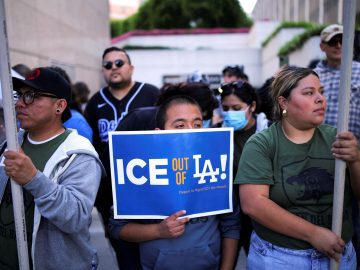
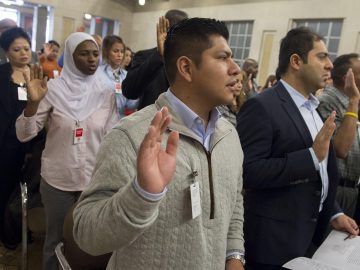
Yes, MacArthur Park matters. But a district as large and dense as District 1 must broaden the scope of debate in this election. The arrival of Donald Trump has altered the landscape of local, state, and national politics. Immigration has become the top issue, accompanied by concerns over aggressive enforcement raids, economic instability, labor rights, housing, justice, and many other areas where the community has been directly affected.
Opponents of Hernandez have focused their criticism on what they describe as a lack of leadership, weak community connections, and insufficient representation of District 1 at City Hall. However, there has yet to be a substantive, detailed discussion of how they would address the challenges Hernandez faces daily as the representative of CD-1.
In debates so far, candidates have referenced issues such as homelessness, cleaning streets and parks, anti-business regulations, mental health, and transitional housing in broad terms. All candidates have expressed support for policing, calling for more foot patrols, graffiti removal, expanded gang-intervention programs, more officers, and increased parking availability throughout the district.
Yet these agendas risk sounding like wish lists if they fail to confront the realities of the city budget and the policy constraints inside and outside City Hall.
As we can see, the issues at stake extend far beyond MacArthur Park—and so does District 1. We hope that in the four months remaining before the election, candidates will present concrete proposals for improvement, and that even those who do not win will contribute ideas that can become part of the eventual winner’s governing platform.
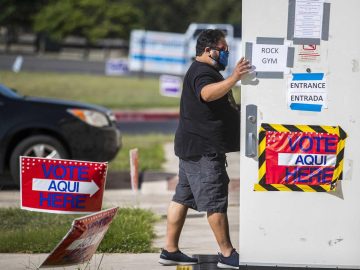
The primary election will be held on June 2, 2026. If no candidate receives more than 50 percent of the vote, the top two candidates will advance to the general election in November 2026.
Voting With Clarity in Los Angeles: Understanding the Issues Behind the Promises in 2026