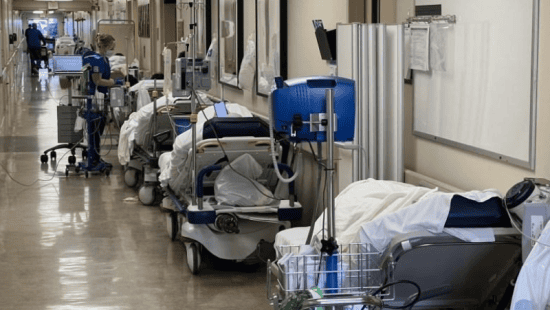
Health officials confirm a mutated H3N2 strain is driving record hospitalizations, raising concerns for older adults and Latino communities across Los Angeles and beyond.
California is experiencing one of its most intense influenza seasons in recent years. The California Department of Public Health (CDPH) confirmed this week the rapid spread of a mutated variant of the influenza A H3N2 virus, a strain that doctors and epidemiologists describe as more contagious and clinically severe than the typical seasonal flu.
The impact is already visible in hospitals. According to official CDPH data, influenza-related hospitalizations have surpassed peaks seen in previous seasons, particularly among older adults, people with chronic illnesses, and patients with compromised immune systems. Several regions across the state report significant strain on respiratory care units.
“The pattern we’re seeing is consistent with a virus that spreads more easily and leads to complications more quickly,” said Dr. Peter Chin-Hong, an infectious disease specialist at the University of California, San Francisco (UCSF), in previous remarks to UCSF Health. “That doesn’t mean the flu vaccine isn’t working—it means the virus is finding more opportunities to spread.”
The circulating variant belongs to H3N2 subclade K, a mutation that, according to the Centers for Disease Control and Prevention (CDC), includes genetic changes that increase transmissibility, even among people vaccinated in prior seasons. Still, experts stress that vaccination remains critical to reducing illness severity and preventing hospitalization.
A recent CDC report notes that while the flu vaccine does not always prevent infection, it significantly lowers the risk of severe complications, hospital admission, and death, especially among high-risk populations.
Added Challenges for Latino Communities
For Latino communities in California, the surge in cases comes amid long-standing barriers to healthcare access, including lack of insurance, fear of high medical costs, and ongoing misinformation. Community organizations warn that these obstacles can delay medical care, increasing the risk of serious outcomes.
“Waiting too long can make the difference between recovering at home and ending up in the hospital,” said Dr. Elena Ríos, president of the National Hispanic Health Foundation, during a recent public health panel. “The flu is not a minor illness when combined with diabetes, asthma, or heart disease.”
What Health Officials Are Recommending
Health authorities continue to emphasize evidence-based prevention measures:
-
Get the flu vaccine as soon as possible, especially young children, older adults, and people with chronic conditions.
-
Wear masks in crowded indoor spaces, particularly if respiratory symptoms are present.
-
Wash hands frequently and improve indoor ventilation.
-
Seek medical care promptly for high fever, breathing difficulty, or extreme fatigue.
The CDPH also warns that the simultaneous circulation of other respiratory viruses is intensifying the severity of this flu season.
While officials avoid alarmist terms like “super flu,” they acknowledge that this season demands heightened community awareness and early action. Past experience shows that early prevention saves lives, especially in communities where influenza continues to take a disproportionate toll.
For California, the message is clear: the flu remains a serious public health threat, and confronting it requires reliable information, early action, and equitable access to care.

Flu Symptoms vs Cold: Why Influenza Is More Dangerous Than Most People Think