Court says federal government cannot override state privacy laws or risk chilling the right to vote for millions of Californians
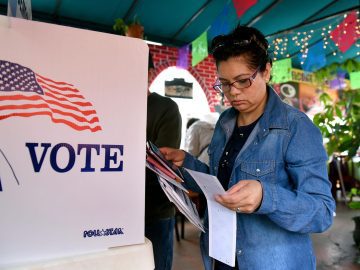
A federal judge in California has halted a Trump administration effort to seize sensitive voter information from the state, delivering a ruling that election law experts say reinforces voter privacy, state authority, and public trust in the democratic process.
U.S. District Judge David O. Carter dismissed a lawsuit brought by the Justice Department that sought access to California’s full voter rolls—data that would have included Social Security numbers and driver’s license numbers belonging to nearly 23 million registered voters. In his decision, Carter described the federal request as an “unprecedented” overreach that could chill voter participation and undermine constitutional protections.
“This was not a technical dispute,” Carter wrote in substance, but a fundamental question about whether the federal government can override state privacy safeguards by stretching civil rights laws beyond their intent.
A Line Drawn Between Oversight and Overreach
The Trump DOJ argued that federal election laws, including the Help America Vote Act (HAVA), gave it authority to demand California’s voter data as part of a broader review of election integrity. Judge Carter rejected that interpretation, finding no statutory basis for the federal government to compel states to hand over highly sensitive personal information.
Instead, the court affirmed that states retain primary responsibility for administering elections, including how voter data is collected, stored, and protected. Carter warned that allowing the federal government to centralize such information would create serious risks—not only of misuse or breaches, but of discouraging eligible voters from registering at all.
Legal scholars have long cautioned that fear of surveillance or data misuse disproportionately affects communities that already face barriers to participation. While Carter’s ruling did not single out specific demographics, civil rights advocates argue the implications are clear: voter confidence depends on trust.
Why This Matters to California—and Beyond
California maintains some of the strongest voter privacy protections in the country, shaped in part by the state’s history of data breaches, identity theft, and political intimidation. The court’s decision preserves those protections and sends a signal to other states facing similar federal pressure.
Organizations such as the American Civil Liberties Union (ACLU), which supported California’s position, framed the ruling as a safeguard against the normalization of mass data collection in elections. “The right to vote includes the right to do so without fear that your most personal information will be swept into federal databases,” one voting rights attorney noted following the decision.
The ruling also lands amid a broader national debate over election administration, fueled by repeated—and largely unsubstantiated—claims of widespread voter fraud. Courts across the country have consistently found that such claims do not justify expansive federal intervention into state-run systems.
A Broader Pattern—and a Legal Boundary
California is not alone. Similar disputes have emerged in states such as Oregon, where federal authorities have sought access to voter records beyond what state law permits. Judge Carter’s decision may now serve as a blueprint for how courts assess those efforts.
At its core, the ruling draws a clear boundary: protecting elections does not require sacrificing privacy, and enforcing civil rights laws does not authorize blanket federal control over state voter data.
For millions of voters—Latino, immigrant, young, and first-time registrants among them—the decision reinforces a simple but powerful principle: participation in democracy should not come with the price of personal vulnerability.
As the 2026 election cycle approaches, that principle may prove just as important as any campaign message or ballot measure.