Deported Salvadorans from the U.S. are reshaping San Salvador’s Historic Center through small businesses, return investment, and urban opportunity
For decades, San Salvador’s Historic Center was synonymous with abandonment, structural violence, and economic displacement. Today, that same area has become one of the most visible—and debated—projects of President Nayib Bukele’s government, which presents it as proof of El Salvador’s “rebirth.”
In a recent post on his official X account, Bukele stated that the recovery of the capital’s historic core is “clear and undeniable” evidence of the country’s transformation. The message was not merely symbolic: it comes at a moment when urban redevelopment has become a central narrative of the current political project.
Beyond presidential rhetoric, however, the revitalization of the Historic Center is a complex process with real implications for residents, merchants, investors, and the Salvadoran diaspora in the United States.
What Has Physically Changed in the Historic Center
Official data and reports from Salvadoran media confirm that the urban intervention has been extensive:
-
More than 200 city blocks recovered, according to the San Salvador mayor’s office
-
Historic plazas reopened, including Plaza Bolívar, which was closed for five years and reopened in November after an estimated investment of $2 to $2.4 million
-
New public spaces, such as Plaza Universitaria, built on the former campus of the University of El Salvador, featuring green areas, food vendors, and family-friendly spaces
-
Modernized infrastructure, including underground wiring, LED lighting, expanded sidewalks, and pedestrian corridors
-
Improved connectivity, with a two-kilometer bike lane along the Rubén Darío Corridor
These projects have been coordinated by the National Directorate of Municipal Works and, in some cases, supported by international cooperation, including the PlanES Project, funded by the Italian Agency for Development Cooperation.
One of the most visible—and sensitive—changes has been the increase in state control throughout the area. Local authorities highlight improvements in safety and public order, conditions that for years drove residents and visitors away.
Urban planners and specialists in historic-center revitalization agree that security is a basic prerequisite for sustainable urban recovery. However, they also caution that such processes must be evaluated over the long term, particularly in contexts where public space is tightly centralized and controlled.
For many Salvadoran families in the United States—who grew up hearing stories of the downtown area as a no-go zone—the reopening carries deep emotional weight: a city space that, for the first time in decades, feels accessible and visible.
Private Investment, Migrant Return, and New Businesses
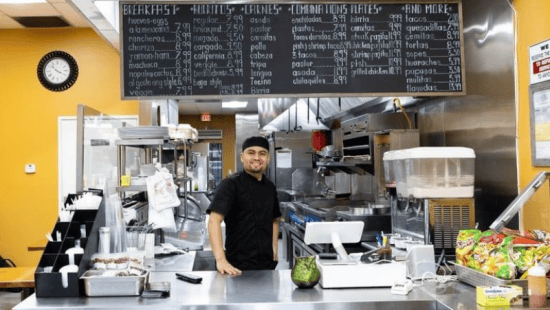
The Ministry of Tourism reports that the revitalization has encouraged the opening of restaurants, cafés, and small businesses, many of them led by returning Salvadorans or families with migration ties.
Examples like La Espada Restaurante reflect a broader trend: businesses betting on the Historic Center as a cultural and economic hub that connects tourism, gastronomy, and urban memory.
For the diaspora in the United States, this trend matters. It reshapes the country’s international image and raises concrete questions about investment opportunities, return migration, property access, and long-term economic viability.
Authorities argue that the goal is to turn the Historic Center into a model of sustainable development and heritage preservation. Yet experts in Latin American urban planning note that the success of such projects depends on a delicate balance:
-
preserving historical memory
-
avoiding displacement of long-standing vendors
-
ensuring real access to housing and jobs
-
maintaining truly inclusive public spaces
Urban revitalization is not merely aesthetic. It determines who gets to stay, who can invest, and who is left out.
For millions of Salvadorans living in the United States, the Historic Center is more than a physical place. It is a symbol of origin, loss, migration, and now, transformation.
The reconstruction of San Salvador’s core also functions as a political message, both domestically and internationally: a state seeking to project order, control, and execution capacity. The open question is whether this urban rebirth will translate, over time, into sustainable and broadly shared benefits.
Because rebuilding a city is possible. Rebuilding social trust is the real challenge.

El Salvador Emerges as a Strategic Investment Hub in Latin America