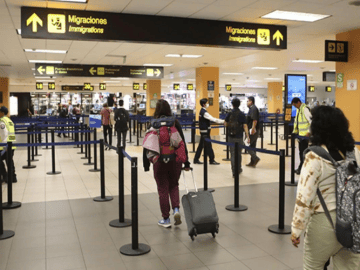
The migrant assistance center in Mexico City offers shelter, documentation, and services to Latino migrants from Venezuela, the Caribbean, and beyond.
The González Bocanegra Human Mobility Assistance Center (CAMHU), as the facility is officially known, is part of the authorities’ response to the constant flow of migrants, deportees, returnees, and refugees arriving in the metropolis seeking temporary or permanent shelter.
Temístocles Villanueva, General Coordinator of Human Mobility Services for Mexico City, explains that the newly created unit has two fundamental pillars: shelters and a Humanitarian Assistance Brigade, which patrols the streets, civil society shelters, and workplaces in search of vulnerable individuals. The brigade also manages a Human Mobility Assistance Center, an office that serves as a first point of contact for people requiring support, from requesting asylum to enrolling their children in schools. For everything to function, they depend on the city’s budget, but also on partnerships with civil society, multilateral organizations, and NGOs.
“We want people to be able to travel here; we want all services to be accessible to everyone, but there are still many bureaucratic hurdles. We’ve been around for less than a year and we’re still streamlining the bureaucracy,” explains the official, as he walks through the ticket windows of the office located a few minutes’ drive from the CAHMU Bocanegra. Cuban Caribbean accents mingle with Haitian Creole, while two young Mexican women in burgundy vests offer guidance on navigating the bureaucracy. Most of the visitors are Venezuelan, although some come from as far away as Hong Kong.
To overcome these paperwork hurdles, the coordination team is using a Guest Registry, a one-year credential that, through a QR code, can be linked to the digital government platform and its CDMX App. It also provides virtual access to free medical services, administrative procedures, mobility, and security. With this temporary identity number, the local government recognizes that the person is part of the city and can access the fundamental rights established by law.
For many migrants, it also replaces national identification cards lost during their journey or that have expired. The next step is to add biometric data, such as fingerprints or facial recognition, to strengthen its security and allow it to serve as the first step in issuing official Mexican documentation, such as the CURP (Unique Population Registry Code), necessary for obtaining formal employment or completing procedures like passport issuance or naturalization. To this end, they are also working to make it interoperable with other federal government systems, such as the National Institute of Migration, which is responsible for the country’s migration policy.
Thousands of Deported Migrants Find Refuge at Tijuana Mega Shelter