From the Revolutionary War to today’s California, Latino communities have helped build the United States through military service, labor, civil rights, culture, and civic leadership. Their story is woven into the nation’s history, not separate from it.
Long before the United States stretched from coast to coast, Latino communities were already helping shape its future.
As the nation marks 250 years since the American Revolution through the America250 commemoration, historians are highlighting a reality that often receives less attention in traditional history books: Latino history is not a recent chapter in the American story. It is part of the nation’s foundation.
For many California families, especially in Los Angeles, that history is also personal. Entire communities trace their roots to generations who lived, worked, served in the military, fought for civil rights, and built neighborhoods long before California became part of the United States.
Understanding that history helps explain not only where the country has been, but also why Latino communities remain central to its future.
The Latino story in America predates the United States itself.
During the Revolutionary War, Spanish military leader Bernardo de Gálvez helped the American cause by supplying troops and launching successful campaigns against British forces along the Gulf Coast. Historians say those victories disrupted British supply lines and strengthened the colonies’ fight for independence.
Decades later, the map of North America changed dramatically after the Treaty of Guadalupe Hidalgo ended the Mexican-American War in 1848. California and much of the American Southwest became part of the United States, and tens of thousands of Mexican residents suddenly found themselves living in a new country without ever moving.
Their language, traditions, businesses, and families became part of the growing American story.
Few places illustrate Latino history as clearly as Los Angeles.
The city was founded in 1781 by 44 settlers known as Los Pobladores, families of Indigenous, African, and Spanish ancestry who established the settlement that became today’s Los Angeles. Their legacy lives on at El Pueblo de Los Angeles Historical Monument near Olvera Street, one of the city’s oldest historic sites.
When Mexico gained independence from Spain in 1821, Los Angeles became part of Mexican Alta California before later becoming American territory in 1848.
That transition reshaped the region, but it did not erase the communities already living there.
Instead, generations of Latino families continued building neighborhoods, businesses, churches, schools, and cultural traditions that still define Southern California today.
Throughout the twentieth century, Latino workers became essential to the nation’s economy.
During World War II, the Bracero Program brought millions of Mexican agricultural workers to the United States to help address severe labor shortages. Their work helped sustain American farms and food production during wartime.
Latino workers also transformed labor rights.
César Chávez and Dolores Huerta co-founded the United Farm Workers, organizing strikes and nationwide boycotts that improved wages, workplace safety, and labor protections for farmworkers. Their efforts influenced labor movements well beyond agriculture.
At the same time, Hispanic Americans served in the U.S. military at remarkably high rates during World War II, Korea, Vietnam, Iraq, Afghanistan, and other conflicts. Many earned the Medal of Honor while confronting discrimination at home, demonstrating extraordinary service despite unequal treatment.
By the 1960s, Los Angeles had become one of the country’s most important centers for Latino civil rights.
Students led the East Los Angeles Walkouts in 1968, leaving classrooms to demand better schools, bilingual education, college preparation, and equal opportunities.
Two years later, more than 20,000 people participated in the Chicano Moratorium, protesting the Vietnam War and the disproportionate number of Latino soldiers dying overseas. The march ended in violence and the death of journalist Rubén Salazar, a moment that remains one of the defining events in Los Angeles civil rights history.
Beginning in the 1980s, refugees escaping civil wars in El Salvador and Guatemala reshaped neighborhoods including Pico-Union and MacArthur Park, adding new languages, traditions, businesses, and civic organizations that continue to influence Los Angeles today.
Latino leadership continues shaping the nation
Latino contributions extend far beyond history books.
Justice Sonia Sotomayor became the first Latina to serve on the U.S. Supreme Court.
Astronaut Ellen Ochoa became the first Hispanic woman in space and later directed NASA’s Johnson Space Center.
Artists, musicians, filmmakers, entrepreneurs, scientists, educators, and elected officials continue expanding Latino influence across American life.
Today, Latinos represent the nation’s largest minority population and play a growing role in California’s economy, workforce, higher education, healthcare, and civic leadership.
California is home to the nation’s largest Latino population, and Los Angeles County is one of the world’s largest Latino metropolitan communities.
That means Latino history is not simply something preserved in museums.
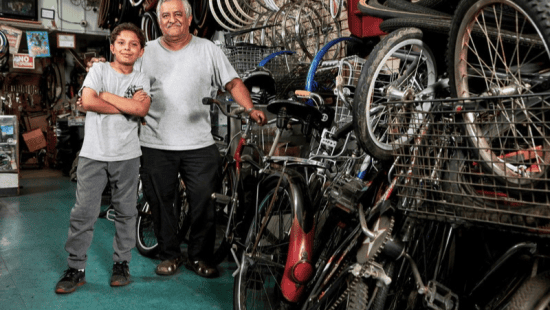
It can be seen in neighborhoods, schools, family businesses, military service, labor movements, public art, food, music, and local traditions across the state.
Understanding this history helps explain many of today’s conversations about education, immigration, housing, voting rights, economic opportunity, and community identity.
It also reminds future generations that Latino history is American history.
America250 celebrations over the next year will encourage communities across the country to reflect on the nation’s first 250 years.
For California residents, that reflection offers an opportunity to recognize how Latino communities helped build the state long before it became an economic powerhouse and continue shaping its future today.
Museums, schools, libraries, and community organizations are expected to host exhibits, educational programs, and public events highlighting these stories, giving new generations the chance to better understand the people who helped build both California and the United States.