Before investing in a business, learn how to interview potential customers, test a real offer and calculate whether the numbers make sense.
You’ve been thinking about opening a business for months. Maybe it’s a cleaning service, a small restaurant or a product you’ve always wanted to sell.
Your family thinks it’s a great idea. Friends tell you to go for it. Someone even says they’d be your first customer.
That’s encouraging. But before you spend your savings, there’s something you need to find out.
Will people actually pay for what you’re planning to sell?
It’s a question worth answering before signing a lease, buying expensive equipment or leaving a steady paycheck.
You don’t have to open a business to begin finding out. You can start small, talk to potential customers and see whether they’re willing to spend real money.
Here’s how.
Find out what people already spend money on
Let’s say you’re thinking about starting a housecleaning business in Los Angeles.
You could ask ten friends whether they’d hire you. Most might say yes. But that doesn’t tell you much about whether you’ll have enough paying customers.
Instead, talk to people who already use cleaning services or have seriously considered hiring someone.
Ask when they last needed help. What did they do? How much did they pay? What frustrated them?
You might discover that people aren’t looking for cheaper cleaning. They’re looking for someone reliable who shows up on time.
Or perhaps they want occasional help rather than a weekly service.
Those answers can change what you offer before you’ve spent much money.
The U.S. Small Business Administration recommends researching customer demand, competitors and pricing before launching a business.
Don’t limit your conversations to relatives. Talk with people who resemble the customers you hope to serve.
And don’t dismiss someone who says they wouldn’t buy. Understanding why can be just as useful as hearing yes.
Give customers something they can actually buy
Now comes the part that separates a promising idea from a possible business.
Put a real offer in front of people.
For example: “I’m offering a two-hour home cleaning service for $80. Would you like to book an appointment?”
That’s a different question from “Do you think my cleaning business is a good idea?”
One asks for an opinion. The other asks someone to make a purchasing decision.
If you’re properly authorized and ready to provide the service, start with a few paid appointments.
If you’re selling a product, consider a small batch. For some products, clearly explained preorders may work, provided you can meet applicable delivery and refund requirements.
Keep track of what happens.
How many people saw your offer? How many asked questions? How many actually purchased?
A few sales won’t guarantee success. But they’ll tell you more about willingness to pay than a room full of compliments.
A sale isn’t the same as a profit
Here’s where many business ideas face their biggest test.
Imagine charging $80 for a cleaning appointment.
You spend $8 on supplies, $12 on transportation and $15 on labor, including an allowance for your own working time.
That leaves $45.
If five customers book, you collect $400. After those direct costs, $225 remains.
Sounds encouraging.
But that money still has to help cover insurance, equipment, advertising, licenses and other expenses.
And if you haven’t adequately accounted for your own time, the business may be earning less than you think.
Suppose your fixed expenses total $900 a month. With $45 remaining per appointment, you’d need 20 appointments just to cover those expenses.
That’s before any additional earnings you want the business to provide.
These are hypothetical numbers, but the lesson is real: Customers must be willing to pay a price that covers the cost of serving them and helps sustain the business.
The SBA’s business-planning resources recommend calculating startup expenses and the sales needed to cover costs.
What if people like your idea but don’t buy?
Suppose you talk with 20 potential customers.
Ten say your service sounds useful. Only three book an appointment.
You might feel disappointed. But you’ve learned something important before committing thousands of dollars.
Maybe the price doesn’t fit your customers’ budgets. Maybe they want a different service. Perhaps you’re talking to the wrong people.
Ask what stopped them from buying.
Then consider changing one part of your offer and trying again.
Don’t assume three purchases prove the idea will succeed. And don’t assume seventeen people declining means it will fail.
A small test gives you clues, not certainty.
What you’re looking for is a pattern you can repeat: customers who need what you offer, are willing to pay and leave enough money after expenses to make the work worthwhile.
Before taking payments, check the rules
Starting small doesn’t necessarily mean operating without permits.
In California, licensing, registration, tax and safety requirements depend on what you’re selling and where you’re operating.
Food businesses, for example, may need specific permits even when preparing products at home.
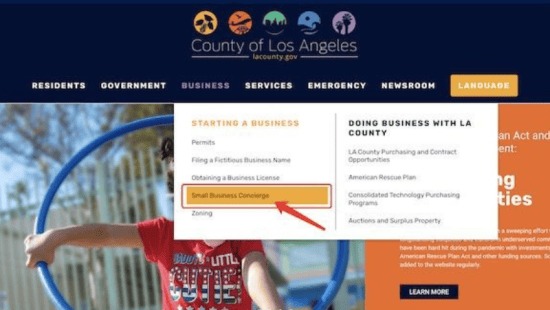
Check with your city or county and the appropriate state agency before accepting paid orders.
For online merchandise sales, review the Federal Trade Commission’s shipping and refund rules.
Your next step: Test your idea before investing more
You can begin with a notebook and four questions:
- Who needs this? Identify the people most likely to become customers.
- What will they buy? Describe a specific product or service and its price.
- Will they pay? Test a real offer and record actual purchases.
- Will the numbers work? Calculate your costs and how many sales you would need.
If you’re also weighing whether to leave your job, Parriva’s guide to testing a business idea before quitting explains how to approach that larger financial decision.
You may discover that your original idea needs work. Perhaps customers want something different, or the price they can afford won’t cover your costs.
That’s worth knowing now.
And if people are buying, your costs make sense and you can repeat those sales, you’ll have something more useful than encouragement.
You’ll have evidence to help decide whether your business deserves the next investment.
Because opening a business is a big decision. Finding out whether customers will pay shouldn’t have to be.